

 Language
 English
 中文简体
 日本語
 русский
 Español
 عربى

Sep, 22, 2026
Kids Water Safety Vest Industry Update: Materials, Standards & Design Trends 2026
Jiangsu Yiheng Sport has spent more than 18 years producing neoprene materials and finished water safety products, so we tend to watch industry trends from the factory floor rather than the showroom. This 2026 kids water safety vest industry update shares what we see from the supply side: how certification expectations are tightening, which materials are gaining ground, and what design details buyers are actually requesting. The short version is that children's flotation has evolved from a basic foam collar into a carefully engineered category — and the pace of change keeps accelerating.
The demand side of the story is just as significant. As participation in swimming, boating, and paddle sports continues to climb around the world, more families are purchasing properly rated safety equipment for their children. We traced the broader pattern of this growth in a recent industry report on water sports demand, and its conclusions apply directly to the flotation category: more product SKUs, tighter size grading, and stronger pressure on factories to prove the quality behind their labels.
Safety Standards and the New Expectations for Children's Flotation
Regulatory approval remains the non-negotiable baseline for any product labeled as a child's life vest, buoyancy aid, or flotation device. In the United States, federal law requires children under the age of 13 to wear a U.S. Coast Guard-approved personal flotation device whenever a vessel is underway. In Europe and much of Asia, standards such as EN ISO 12402 define the buoyancy, turning performance, and securing systems that certified products must meet. For an exporter, the practical consequence is that one design cannot simply be sold everywhere; each target market demands its own certification pathway.
The 2026 industry conversation, however, is moving beyond legal minimums. Water safety organizations and pediatric groups are drawing a sharp line between true flotation devices and swim-training aids. Lightweight swim vests used in calm pools are useful teaching tools, but they are not certified life jackets, and they should never be marketed as a substitute for one. Manufacturers that label products honestly, and design them for a clearly stated activity, are building trust with both retailers and parents.
What should a buyer look for in a certified kids water safety vest?
- A weight range printed on the label, because flotation sizing is driven by body weight, not age.
- A buoyancy rating matched to that weight range and suited to the intended water activity.
- A closure system that a child cannot easily open by himself or herself.
- Batch test documentation proving compliance with the applicable standard.
Material Science: Building a Modern Kids Water Safety Vest
Material selection is where the real engineering of a child's flotation vest happens. Traditional vests are built from slabs of polyethylene or EVA foam stitched inside a fabric shell — a functional but basic approach. Over the past three years, we have observed a steady shift toward dual-material construction: a laminated neoprene shell wrapped around a shaped foam core. This design distributes buoyancy more evenly across the torso, allows better freedom of movement through the shoulders, and reduces chafing on the neck and arms.
Neoprene earns its role in this construction for three reasons. Its closed-cell structure contributes inherent buoyancy over the full coverage area. The material insulates, so a child wearing a neoprene-backed vest stays comfortable longer in cooler water. And when neoprene is laminated with nylon or polyester jersey on both faces, the outer fabric resists abrasion from buckles, pool chemicals, sand, and repeated washing. We produce SBR and CR neoprene fabric ourselves, in thicknesses from 2mm to 9mm, and we see daily how these material choices influence the finished vest.
| Material | Buoyancy | Durability | Comfort | Typical Use |
|---|---|---|---|---|
| Polyethylene (PE) foam | High | Moderate | Firm | Entry-level vests |
| EVA foam | Moderate | Good | Flexible | Swim-training aids |
| SBR neoprene laminate | Moderate | High | Soft and stretchy | Premium safety vests |
| CR neoprene laminate | Moderate | Very high | Excellent | Cold-water and high-end models |
Sustainability is reinforcing the material case as well. Limestone-based CR neoprene reduces reliance on petroleum-derived feedstocks, and recycled nylon facings are a recurring request from European and North American buyers. We are also seeing water-based adhesives replace solvent-based systems in lamination. Retailers preparing their environmental claims for the next season should be asking suppliers directly how these materials are sourced and bonded.
Fit, Visibility, and the Anatomy of a Safer Vest
Fit is the first thing a safety expert checks on a child's vest, and the first thing a child complains about. The standard field test is simple: fasten the vest, lift the child by the shoulder straps, and confirm the vest does not slide above the chin or ears. With the straps tightened, the vest should feel snug through the torso without restricting breathing or arm movement. Crotch straps are essential in toddler and youth sizes because they stop the vest from riding up over the face in the water. Multi-position chest and side straps extend the usable life of the vest across growth spurts.
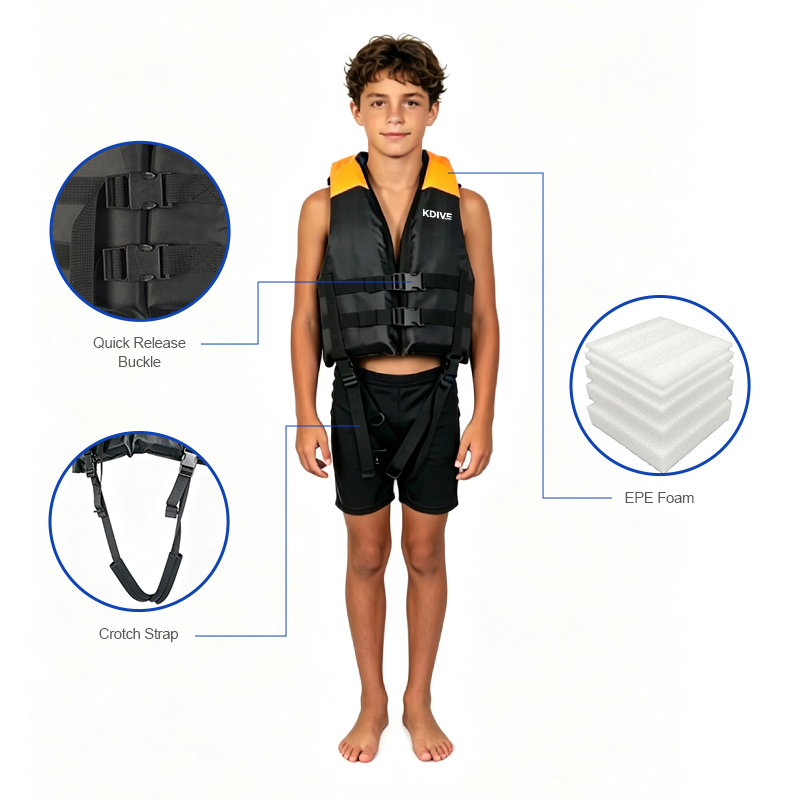 Kids Secure Fit Safety Life Vest with EPE Foam and Crotch StrapThis youth vest combines black and orange high-visibility panels with dual-row front buckles and a crotch strap. It is a practical choice for parents checking fit and visibility, as described in the text.View Product →
Visibility is the second pillar of a safe children's flotation device. High-visibility yellow and orange shells, paired with retroreflective tape, allow parents and lifeguards to track a child instantly in crowded pools or choppy open water. We deliberately build one of our youth buoyancy vests in yellow and blue because that combination holds the strongest contrast against both dark lake water and bright pool surfaces, giving supervisors an extra second of reaction time.
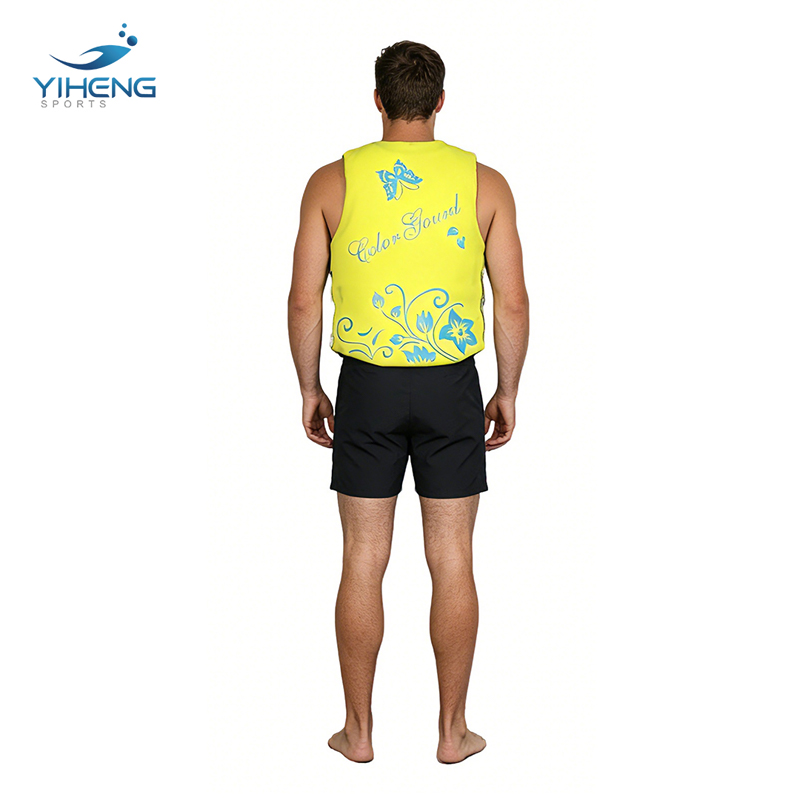 High-Visibility Yellow and Blue Buoyancy Aid VestA bright yellow vest with blue print and YKK zipper, designed to stand out in lakes and pools. Its adjustable waist system suits recreational use, making it a key product for enhancing child water safety visibility.View Product →
Manufacturing Trends: Customization, Layered Safety, and Supplier Accountability
The supply chain for children's flotation is consolidating around fewer, more specialized factories. That is good news for safety. A factory that has engineered hundreds of vest patterns understands strap placement, seam reinforcement, and foam distribution far better than a generalist garment workshop. When buyers evaluate a potential manufacturing partner for kids water safety vests, we recommend checking four things:
- Batch-level buoyancy testing and retained samples from each production lot.
- Seam strength and buckle pull-test records that can be shared with retail compliance teams.
- The specific certificates the factory holds for each target market, not just a general quality statement.
- Experience with children's sizing curves, which differ significantly from adult patterns.
Customization is the second trend shaping our order books. Retail brands increasingly want proprietary prints, color-matched trims, and logo-embossed hardware instead of stock catalog designs. A partner that controls both material production and garment manufacturing can deliver this without inflating lead times, because the design constraints of the neoprene shell are understood from the start.
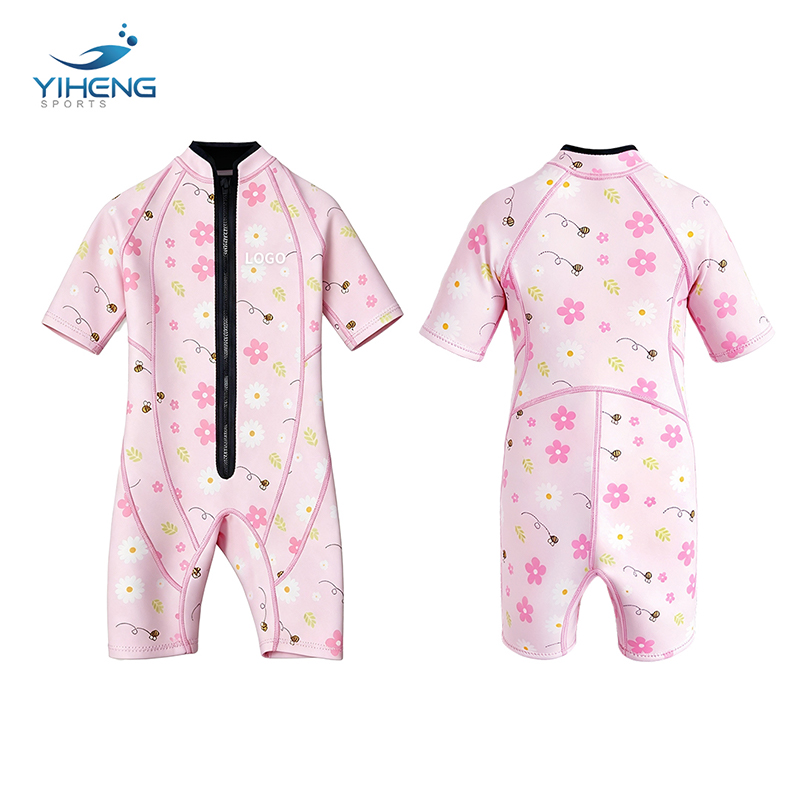
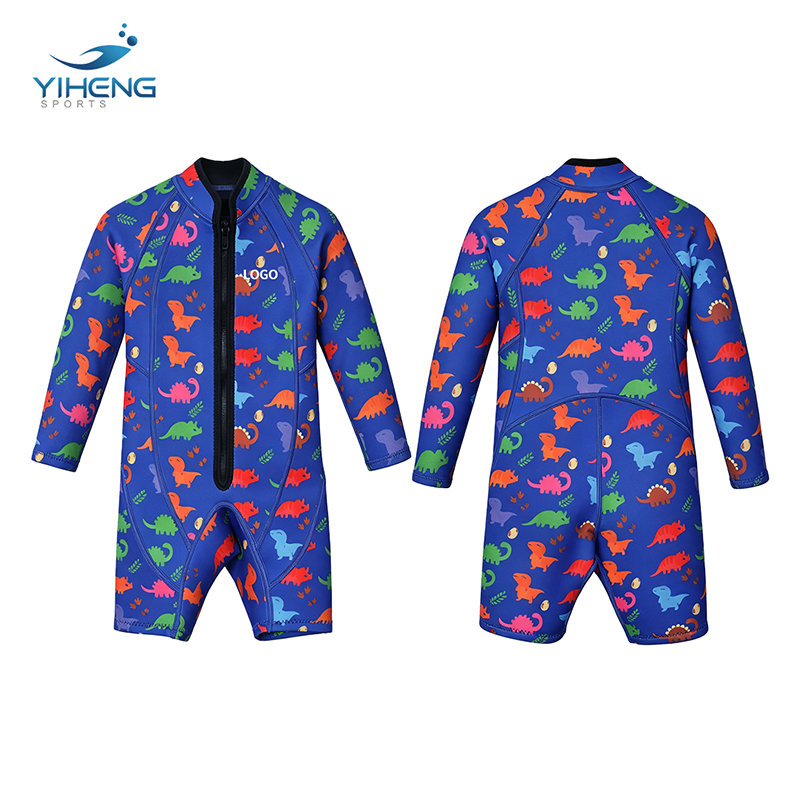
Third, we see growing interest in layered safety rather than a single product. Parents and swim programs want a flotation vest worn over a thermal wetsuit, especially for open-water lessons in cooler climates. A 2mm children's wetsuit with colorful cartoon prints does more than look fun; it keeps core temperature stable, delays fatigue, and helps children stay focused and calm in the water. Supplying both garments from one factory simplifies quality control and guarantees that the color story and trim details match across the complete set.
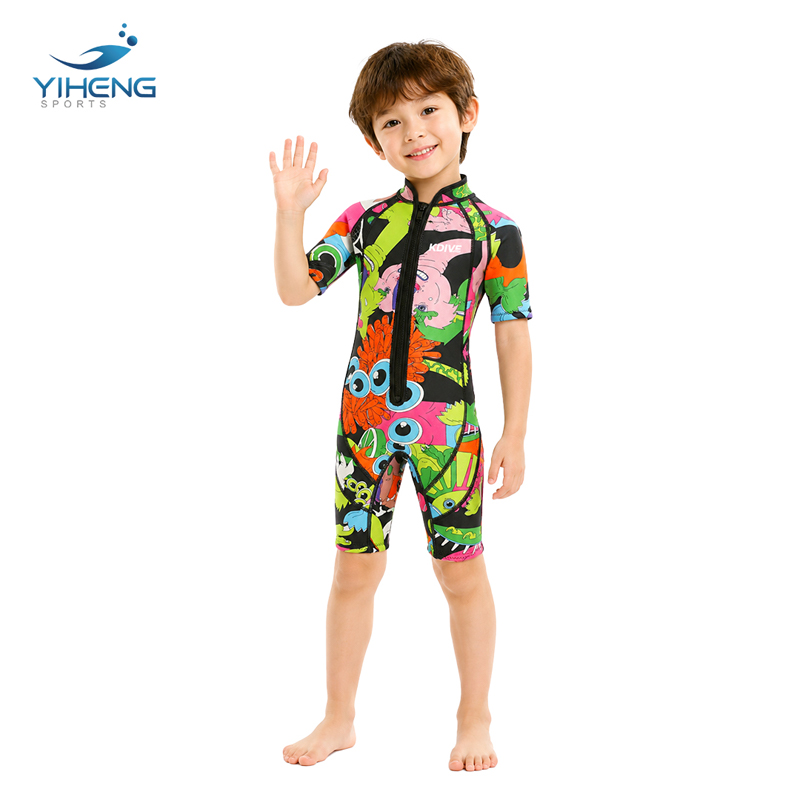 2mm Neoprene Cartoon Print Children's Shorty WetsuitA front-zip shorty wetsuit with flatlock seams and durable stretch fabric, offering lightweight warmth for open-water lessons. This product extends the child's comfort and focus, complementing flotation vests.View Product →
Whether you are building a new brand, equipping a swim school, or expanding a retail range, we would welcome the opportunity to talk about what a genuine manufacturing partnership looks like. Our contact team can share material swatches, test reports, and certification samples from the current kids line. That conversation is where good products usually begin.
The kids water safety vest industry is heading toward products that are more precisely fitted, easier to see, more sustainable in their materials, and far more clearly labeled for the activities they support. Manufacturers that take these responsibilities seriously, and that can prove their quality at batch level, will lead the next phase of growth. From our factory in Jiangsu, that is exactly the future we are building.
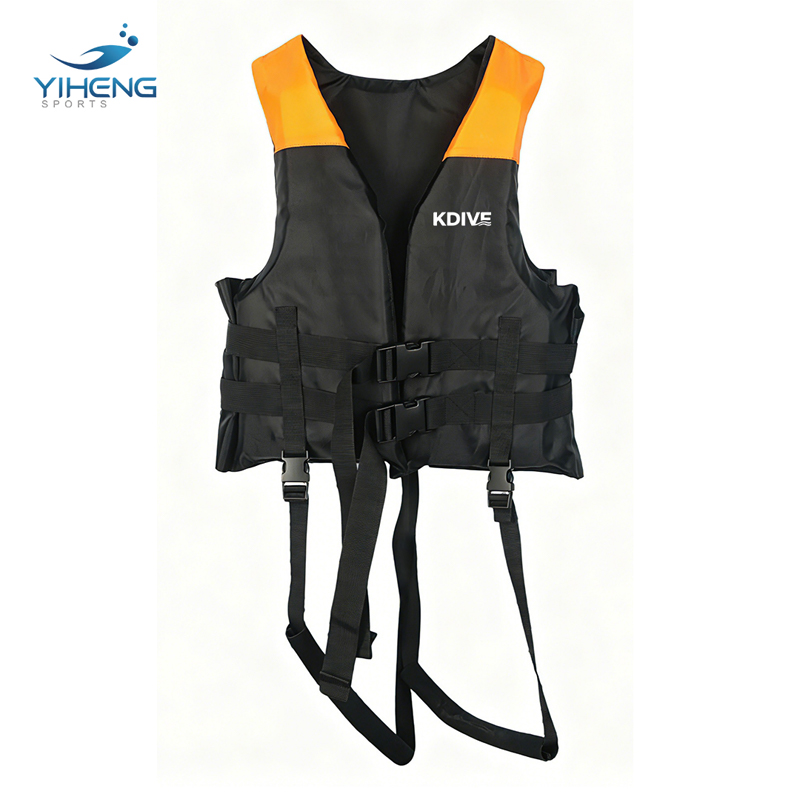

LET’S DEVELOP YOUR NEXT NEOPRENE PRODUCT LINE
Quick Links
Product Categories
Contact Us
-
 Email: postmaster@yihengsport.com
-
 Mobile: +86-13564100539
-
 No. 480 Jiangping Road, Madian, Binjiang Town, Taixing City, Taizhou City, Jiangsu Province, China.
Copyright © Jiangsu Yiheng Sports Products Co., Ltd. All Rights Reserved
China Wetsuit Manufacturer Neoprene Fabric Manufacturer
