

 Language
 English
 中文简体
 日本語
 русский
 Español
 عربى

Sep, 30, 2026
Wetsuits for Women: Fit, Thickness and Style Guide from the Factory Floor
Talk to women who swim, dive, paddle and surf and they will tell you the same thing: a good women's wetsuit is not a men's suit in a smaller size. The bust, the waist-to-hip ratio, the length of the torso and the way a zip lies against the spine all decide whether a suit keeps you warm or fights you every time you move. That is exactly why we cut every women's wetsuit on its own pattern block instead of scaling a men's design down.
Demand has followed the same logic. As more women take up open-water swimming, diving, paddleboarding and triathlon, the market for neoprene gear has broadened well beyond the classic black one-piece. We covered that shift in our look at the rising popularity of water sports, and it shows up in every order sheet we receive: more colours, more cuts, more thickness options, more sizes at both ends of the range.
We are Jiangsu Yiheng Sports, a neoprene manufacturer based in Jiangsu, China. Since 2008 we have produced both the raw material and the finished garment, which means we see women's wetsuits from the fabric roll up. Our factory covers more than 15,000 square metres, employs over 120 people, and turns out everything from 1mm bikini-cut snorkeling suits to 7mm hooded suits and drysuits for cold water. That full-chain view is what this guide is built on.
What Changes When a Wetsuit Is Cut for a Woman
Fit is not a cosmetic issue in cold water; it is a thermal one. A suit that gaps at the lower back or the armpits lets water flush through, and every flush pulls heat away from the body. A suit that is too tight across the chest restricts breathing and shortens a dive. The patterns that solve this are genuinely different from men's patterns, and the differences are consistent across almost every style we produce:
- Shorter torso and proportionally longer legs, so the suit does not ride up when the arms lift.
- More room at the bust with a narrower ribcage below it, rather than a straight tube shape.
- A higher waistline and a deeper hip curve to follow the natural hip-to-waist ratio.
- Narrower shoulders and shorter, slimmer sleeves, which reduce bunching at the wrist seal.
- Softer, higher-stretch neoprene panels in the chest and back to keep movement easy.
- Colour, print and panel options treated as a design feature rather than an afterthought.
None of this is guesswork. Our pattern team tests new blocks on real swimmers and divers, and we keep adjusting the grade rules for each size so that a small and an extra-large are both proportioned correctly instead of being stretched from one master pattern.
Thickness Comes First: Matching Neoprene to the Water
Before style, choose thickness. Neoprene works by trapping a thin layer of water against the skin and warming it, and the thicker the panel, the more insulation it provides and the less flexibility it offers. As a rough starting point for women's suits, the table below reflects what we see working in real conditions. Individual tolerance, body composition and session length all shift the answer slightly.
| Water temperature | Suggested thickness | Typical activities |
|---|---|---|
| 27 °C / 80 °F and warmer | 1 mm to 1.5 mm | Travel snorkeling, bikini-cut suits, rash guards |
| 22 °C to 26 °C / 72 °F to 79 °F | 2 mm to 3 mm | Recreational scuba, SUP, surfing, warm-water diving |
| 17 °C to 21 °C / 63 °F to 70 °F | 3 mm to 4 mm | Full-length diving suits, triathlon, long paddle sessions |
| 12 °C to 16 °C / 54 °F to 62 °F | 5 mm with hood and gloves | Cold-water diving, spearfishing, extended sessions |
| Below 12 °C / 54 °F | Drysuit or heavy semi-dry | Ice diving, rescue work, winter training |
Two practical notes. First, wind and air temperature matter as much as water temperature on a paddleboard or a dive boat, so a 3mm suit in 24 °C water can still feel cold during a long surface interval. Second, seams do as much work as thickness: a blind-stitched and glued seam loses far less heat than a flatlock seam, which is why we use GBS construction on suits intended for colder water.
Choosing a Suit by Activity
The same woman may need three different suits across a single year. Here is how we usually advise buyers to split the range.
Snorkeling and warm-water travel
For resort water, lightness wins. A 1mm bikini-cut suit or a 2mm shorty provides sun protection, abrasion resistance against coral and enough warmth for an hour in the water without the bulk of a full suit. Long-sleeve snorkeling jackets in 2mm to 3mm are the most versatile travel item we make, because they pair with any swim bottom and pack flat.
Scuba diving and cold water
Recreational divers generally land between 3mm and 5mm, with a hooded one-piece for anything below 20 °C. A hood makes a measurable difference because the head is where a great deal of heat is lost. For women diving in temperate or cold water, a 5mm hooded CR suit worn with a proper seal at the neck, wrists and ankles is the workhorse option.
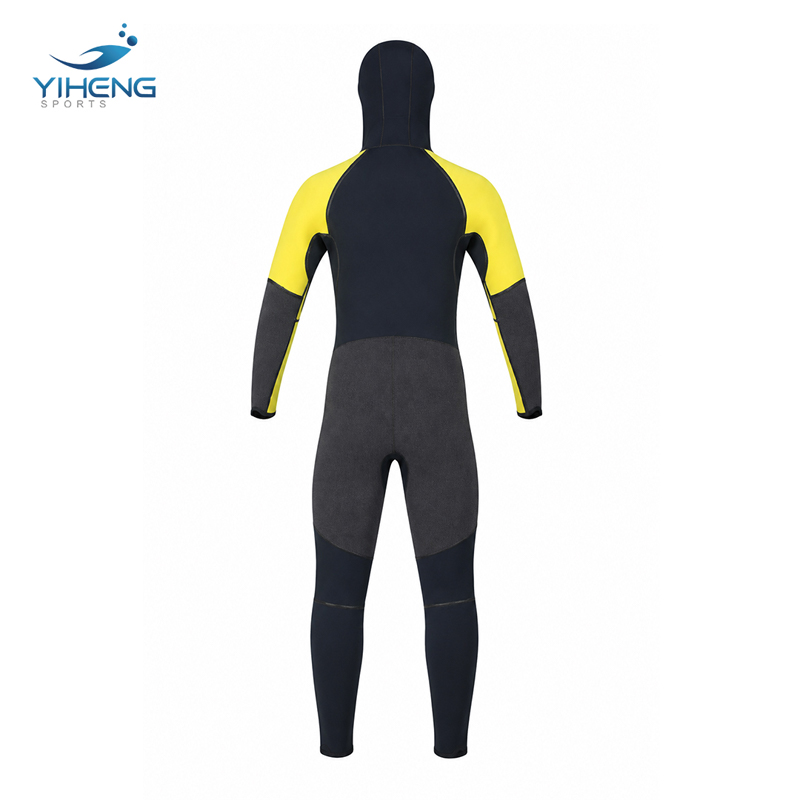 Women 5mm CR Neoprene Hooded Scuba Diving Wetsuit Front Full Zipper Full Body WetsuitMaterial: Super stretch fabric + 5mm CR neoprene + nylon fabric Color: Yellow spliced with black Wear-resistant Reinforcement: Kevlar reinforced at knees, elbows and h...View Product →
SUP, surfing and sailing
Paddle sports need shoulder mobility above all, so we build these suits with super-stretch panels across the upper back and a long-sleeve cut that does not bind on the catch. A 3mm full suit handles most coastal paddling, while sleeveless Long John styles suit sailors who want complete freedom in the arms and a warm core.
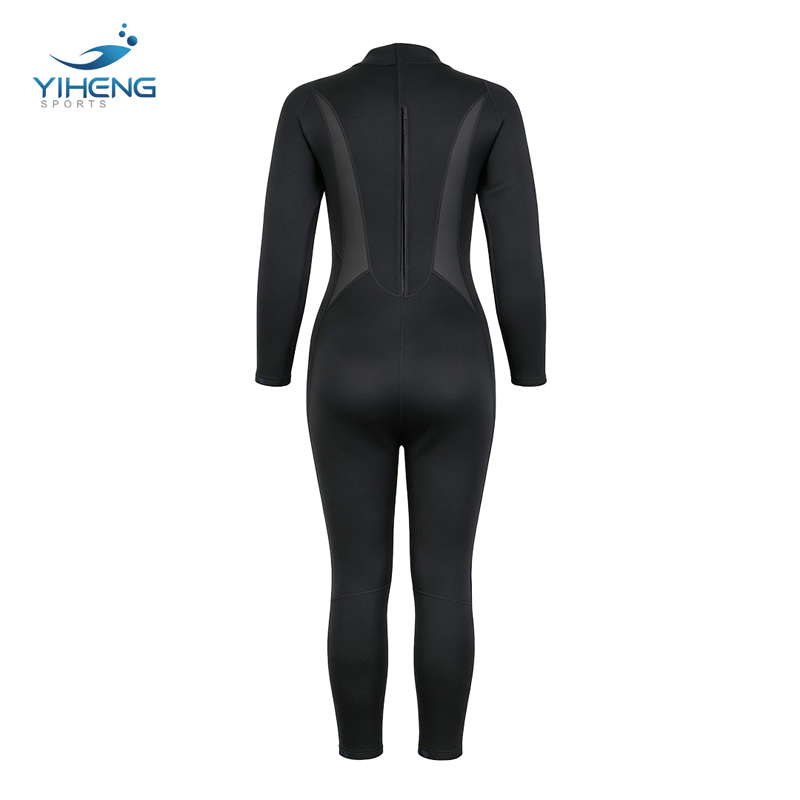 3mm Neoprene Black Long Sleeve One Piece Women's SUP WetsuitMaterial: Nylon outer + 3mm CR neoprene + Nylon inner, embossed smooth skin on chest and back Color: Black Style: Long-sleeve one-piece Reinforcement: Staircloth reinf...View Product →
Triathlon and open-water racing
Here the goal is buoyancy and low drag rather than maximum insulation. Smooth-skin neoprene panels on the chest and legs lift the hips in the water, and a back zip with a short leash keeps the neckline low. A 2mm women's triathlon suit is usually enough for the swim leg in summer races and still adds a useful safety margin in cold lakes.
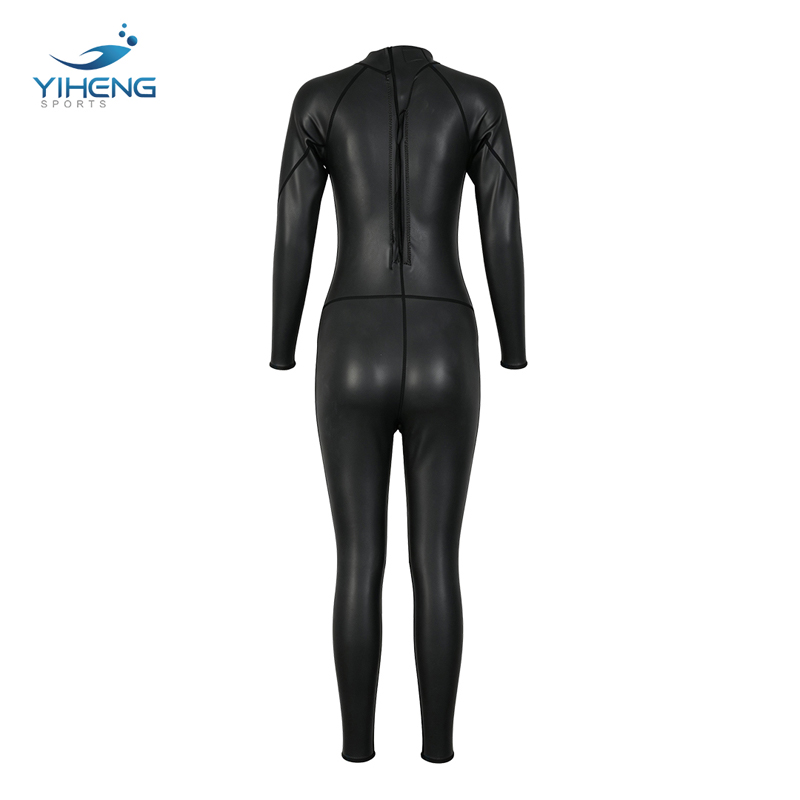 2mm Smooth Skin Back Zip Women's Triathlon WetsuitMaterial: 2mm CR neoprene +nylon fabric Color: Black Style: One-piece Stitching Process: Four-needle six-thread stitching technology Zipper: Back YKK zipper Logo: Cust...View Product →
Freediving, spearfishing and rescue
Freedivers favour two-piece suits with a high-waist bottom and a beaver-tail jacket, because the overlap seals better at depth. Camouflage prints, smooth-skin outer surfaces and reinforced knees round out the specification list. Rescue and professional users move up to butyl and breathable drysuits, which keep the wearer completely dry in extended cold exposure.
Fit, Seams and Neoprene Grade: What Buyers Should Check
When you are comparing women's wetsuits, whether for personal use or for a retail line, run through the same checklist we use on the production floor:
- Measure bust, waist, hip and torso length, then match to the size chart rather than to clothing size.
- Check the neck, wrist and ankle seals, which should sit flush without pinching or leaving a visible gap.
- Confirm the seam type: GBS and blind stitching for cold water, flatlock for warm water and high-stretch panels.
- Look at zip placement, since a back zip is easier to enter while a front or chest zip improves flexibility and seal.
- Ask about the neoprene grade, as CR offers better elasticity and compression recovery than SBR at a higher cost.
- Test the panel layout, especially whether stretch panels sit where the arms and shoulders actually move.
Grade matters more than most shoppers expect. We laminate our own neoprene from 2mm to 9mm in both SBR and CR, with nylon, polyester and elastic loop-back face fabrics, which lets us tune stretch, abrasion resistance and thermal performance to the intended price point instead of accepting whatever the mill happens to hold in stock.
Ordering Women's Wetsuits in Volume
For brands, clubs and distributors, the questions change from "which suit" to "which specification, which size set and which delivery". The most useful things to prepare are a clear size grading for your market, a colour and print reference, the intended water temperature range, and any labelling or packaging requirements. From there we can build samples on your pattern or ours.
- Private label and OEM production with custom size runs, including plus and petite grading.
- Print, colour-block and contrast-sleeve options for retail differentiation.
- Matching accessories such as hoods, gloves, buoyancy aids and rash guards for a complete seasonal range.
- Fabric supply for manufacturers who prefer to cut and sew in their own facility.
If you are planning a women's wetsuit line for the coming season, contact our team with your target temperatures, size range and volume, and we will come back with a specification and a sample plan.
A women's wetsuit only works when the pattern, the thickness, the seam construction and the neoprene grade all point in the same direction. Get those four things right and a suit becomes something a woman forgets she is wearing, which is the highest compliment neoprene can receive. Get them wrong and no amount of clever marketing will keep the suit in the water.
After eighteen years of laminating fabric and sewing finished suits, we still find that the simplest questions decide the outcome: how cold is the water, how long is the session, and how does the suit fit when the arms are overhead? Answer those honestly and the right design usually chooses itself.

LET’S DEVELOP YOUR NEXT NEOPRENE PRODUCT LINE
Quick Links
Product Categories
Contact Us
-
 Email: postmaster@yihengsport.com
-
 Mobile: +86-13564100539
-
 No. 480 Jiangping Road, Madian, Binjiang Town, Taixing City, Taizhou City, Jiangsu Province, China.
Copyright © Jiangsu Yiheng Sports Products Co., Ltd. All Rights Reserved
China Wetsuit Manufacturer Neoprene Fabric Manufacturer
