

 Language
 English
  中文简体
中文简体  日本語
日本語  русский
  Español
  عربى
عربى 
Sep, 10, 2026
GBS Seamless Bonding Technology Explained: A Guide for Neoprene Gear Buyers
Twenty minutes into a cold-water paddle session, a familiar trickle of water finds its way down your shoulder. For anyone who has worn neoprene gear in cool conditions, the source of that trickle is rarely the fabric itself. It is the seam line. Panels of neoprene are dependable; the joints between them determine how long you stay dry, and that is exactly where GBS seamless bonding technology changes the outcome.
GBS stands for glued and blind stitched, and it has become a reference standard in the neoprene garment industry for one simple reason: it lets manufacturers create seams that keep water out without sacrificing the stretch that makes wetsuits and drysuits wearable. Instead of driving a needle completely through the material and leaving needle holes as water paths, a GBS seam is first glued, then closed from the inside with a stitch that engages only the inner surface. This article explains how GBS works, where it outperforms alternative seam constructions, and what buyers should verify before placing an order.
What GBS Seamless Bonding Actually Is
GBS is not a single operation but a two-stage method developed for closed-cell neoprene. In the first stage, the factory applies adhesive to both edges of the neoprene panels and presses them firmly together, creating a structural bond that is the seam's primary defense against water. In the second stage, a blind stitch machine sews through only part of the stack, catching the inner layers while leaving the outer face of the neoprene almost untouched.
Why blind stitching if the adhesive already holds the seam? Because adhesive alone ages. Neoprene flexes constantly at the bonded edge, and a combination of saltwater, sunscreen, and body oils gradually challenges the bond line. The blind stitch acts as mechanical insurance: it keeps the panels aligned under stress while the glue continues to provide the main sealing effect. That is why GBS seams consistently outlast both glue-only construction and conventional flatlock stitching in wet, cold use.
Why GBS Bonding Matters for Neoprene Garments
For anyone sourcing wetsuits, drysuits, or neoprene accessories, the advantages of GBS translate into measurable performance differences rather than marketing terminology.
- Water resistance: because the needle never passes fully through the neoprene, there are no continuous channels for water to travel along. Flatlock seams, by contrast, produce hundreds of tiny holes across the entire thickness and can flush water through the suit under the movement of paddling or swimming.
- Stretch retention: full-piercing stitches restrict how far the neoprene can elongate. GBS seams allow the material to stretch close to its engineered limit, which keeps the garment close to the body and preserves its thermal performance.
- Comfort and chafe reduction: the blind stitch leaves a low-profile seam on the inside. Flatlock ridges are a well-known source of skin irritation at the neck, armpits, and hips, especially during long sessions.
- Durability: the combination of adhesive and stitched backup means the seam resists both gradual peeling and sudden stress, such as climbing onto a paddleboard or pulling a drysuit zipper over the shoulders.
GBS vs. Flatlock, Glue-Only, and Taped Seams
To understand where GBS fits, it helps to compare the four construction methods most commonly offered on neoprene products.
| Seam type | Water resistance | Stretch retention | Internal profile | Common applications |
|---|---|---|---|---|
| Flatlock stitching | Low: needle holes allow water exchange | Moderate: the seam line restricts stretch | Raised ridge that can irritate skin | Warm-water surf suits, rental wetsuits |
| Glue-only assembly | Good initially, declines as adhesive ages | High | Low profile | Budget wetsuits, short-session garments |
| Glued and blind stitched (GBS) | High: outer surface remains closed | High | Low profile | Sailing long johns, SUP suits, cool-water wetsuits, neoprene drysuits |
| Stitching plus seam taping | Very high when the tape stays bonded | Reduced by tape stiffness | Medium profile, visible tape lines | Extreme cold-water suits, membrane drysuits |
GBS occupies the practical middle ground. Fully taped seams add cost and stiffness and are rarely needed unless the garment must be waterproof without a base layer beneath, as in a drysuit. For a sailing long john or a SUP wetsuit, where some water exchange is acceptable but cold flushing is not, GBS delivers the best balance of protection, flexibility, and wear life.
How a GBS Neoprene Garment Is Made
In a factory that produces GBS garments, the process follows a disciplined sequence, and each step influences the performance of the finished seam.
- Fabric preparation: neoprene rolls are conditioned for 24 to 48 hours so the rubber core and the jersey liner stabilize. Shrinkage in the liner is a leading cause of seams that pucker months after production.
- Adhesive application: adhesive is applied in a controlled band along the panel edges. Coating weight matters: too little produces weak joints, and too much creates stiff seams that restrict stretch.
- Pressing and lamination: the coated edges are aligned and passed through a roller press at a controlled temperature and pressure, forcing the adhesive into the neoprene's cell structure and removing trapped air.
- Blind stitching: a GBS machine closes the seam from the inside, engaging only the inner layers. Stitch density and thread tension are set according to thickness and seam location.
- Inspection and curing: finished seams are inspected, stretch-tested, and allowed to cure for at least 24 hours before packing. Reliable factories also run flex tests on sample pieces from each batch.
Quality is decided in these steps rather than by any particular machine brand. A factory that documents adhesive weight, press parameters, and stitch settings will produce consistent seams; one that treats GBS as a label will not. During supplier evaluation, ask to see seams after flex testing rather than only on a freshly cut sample.
Where GBS Makes the Biggest Difference
Not every neoprene garment needs GBS, but in several categories the technology is close to essential.
Sailing keeps the upper body in motion for hours, and a sleeveless long john must seal at the shoulders and waist while leaving the arms completely free. A 4mm GBS construction achieves exactly that: the glued seam keeps spray and occasional immersion water out, while the absence of raised stitching prevents chafing under continued leaning and twisting. This is why our sailing wetsuit program specifies 4mm GBS construction for the long john.
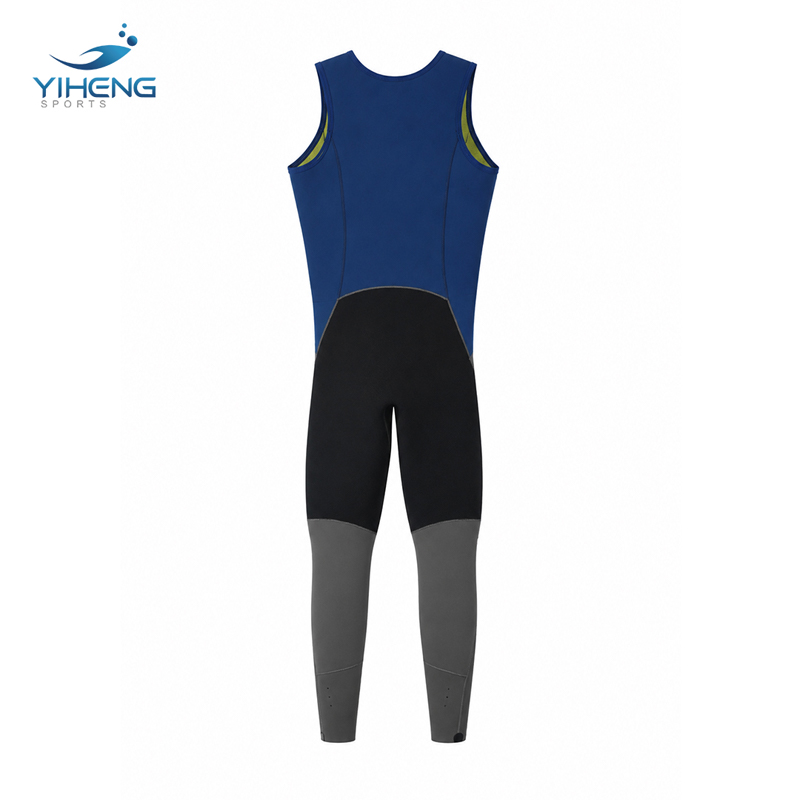 Men's 4mm Sleeveless GBS Long John Wetsuit for SailingA sleeveless long john with 4mm GBS construction and reinforced knees and hips, designed for sailing and surfing. Its glued seams reduce water entry while keeping arms free for motion, as highlighted in the preceding sailing context.View Product →
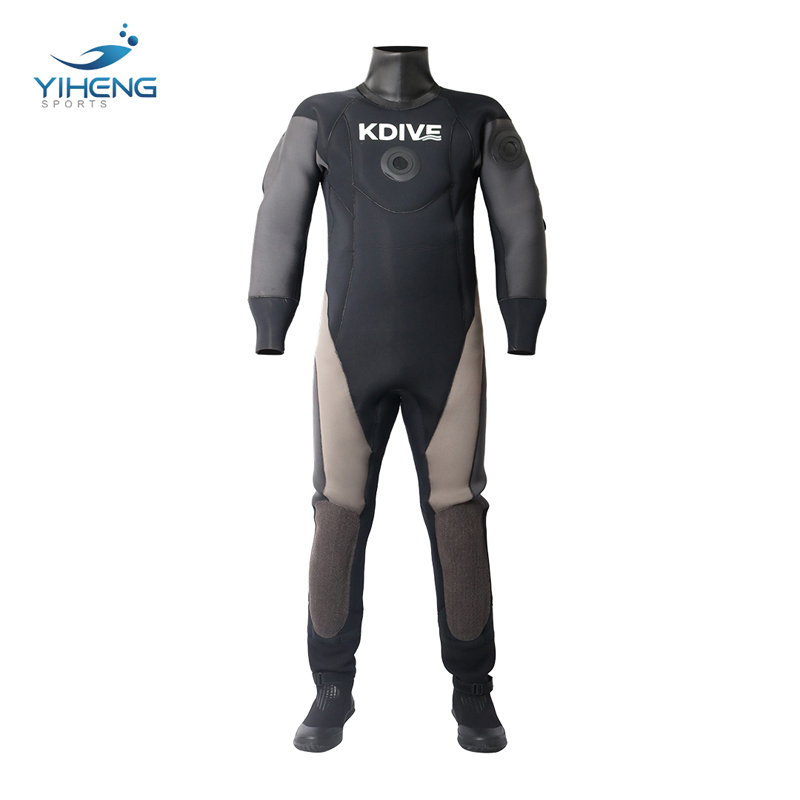
For drysuits, the requirement is stricter: no water should enter at all. In neoprene drysuits, GBS seams sit between the flexibility that neoprene users appreciate and the sealing performance that the application demands. When combined with a waterproof zip and sealed cuffs, a GBS-neoprene drysuit can serve divers, kayakers, and rescue teams in cold water while remaining far easier to move in than a rigid membrane suit.
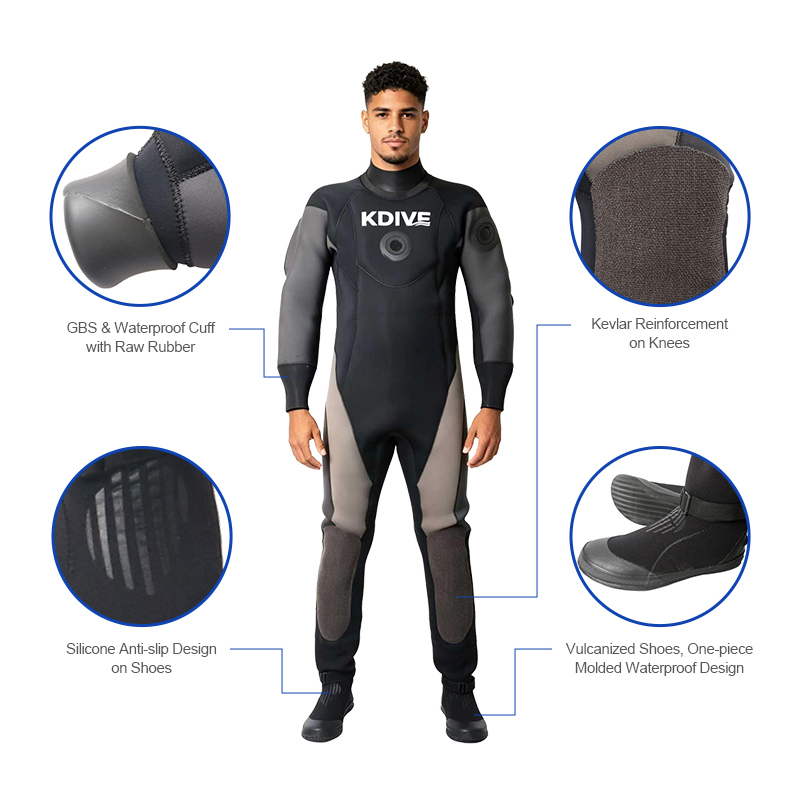 GBS Explorer Thermal Drysuit with Fleece LiningThis drysuit uses glued and blind-stitched seams, a watertight zipper, and Smoothskin seals to minimize water ingress. Kevlar reinforcements and integrated boots suit demanding cold-water use by divers, kayakers, and rescue teams that need mobility.View Product →
Stand-up paddleboarding sits in the middle. A 3mm full wetsuit with GBS seams offers enough insulation for cool lakes and coastal paddles, enough stretch for repeated strokes, and seams that do not flush cold water every time you sit down on the board.
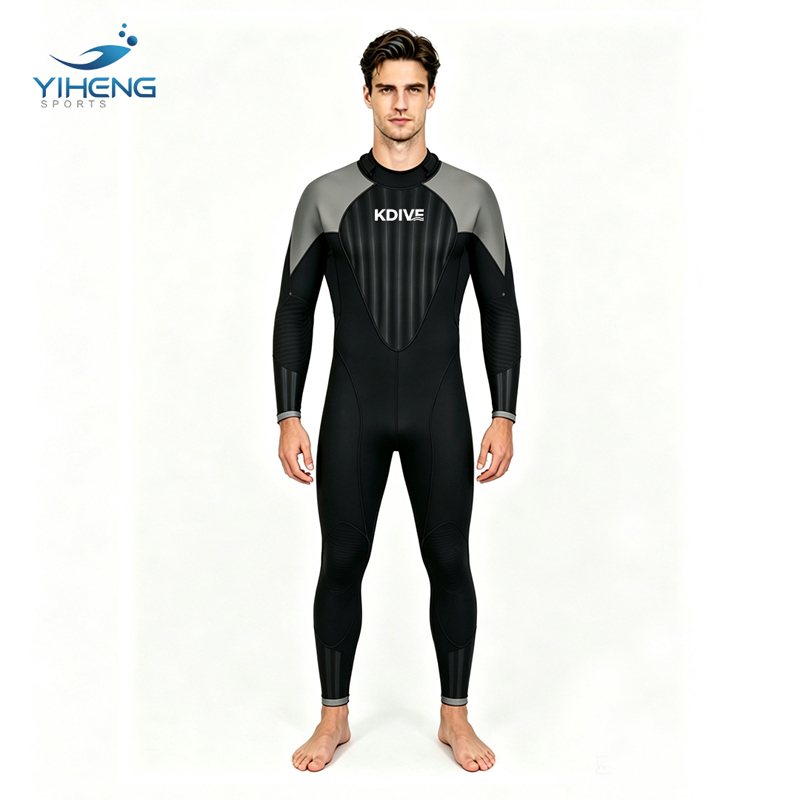 Men's 3mm GBS SUP Full Wetsuit with Back ZipA 3mm full wetsuit with blind-stitched seams, thermal lining, and silicone grip panels, tailored for stand-up paddleboarding. It balances insulation, stretch, and reduced cold-water flushing when sitting or paddling on the board.View Product →
Remember that GBS only joins the panels; the base material carries the insulation load. The difference between SBR and CR neoprene, and between nylon and polyester face fabrics, is just as important as seam technology. Review the properties of the neoprene fabric itself before finalizing a specification, because the seam and the material must be designed as one system.
Quality Checks to Insist On Before Ordering
Specifying GBS is not enough; a buyer also needs to verify that the factory executes it reliably. Add these points to your checklist.
- Flex-test results: request samples that have been flexed repeatedly at your expected water temperature. Adhesive bonds that fail under cold flexing are a common cause of premature seam separation.
- Overlap consistency: a consistent bonded overlap, typically 8 to 12 mm, indicates disciplined production. Irregular overlaps suggest poor alignment and weak joints in some areas.
- Stretch recovery: a GBS seam should return close to its original length after extension. Permanent widening in the seam line points to insufficient curing or incorrect adhesive application.
- Care instructions: GBS garments need to be rinsed in fresh water after use and stored away from direct heat. If the factory cannot provide proper care instructions, treat that as a warning sign.
Choosing GBS is the right first step, but verifying execution is what separates a dry, comfortable session from a leaky one. The best approach is to request seam samples and flex-test data from the factory and compare them against your own usage conditions before committing to a production run.
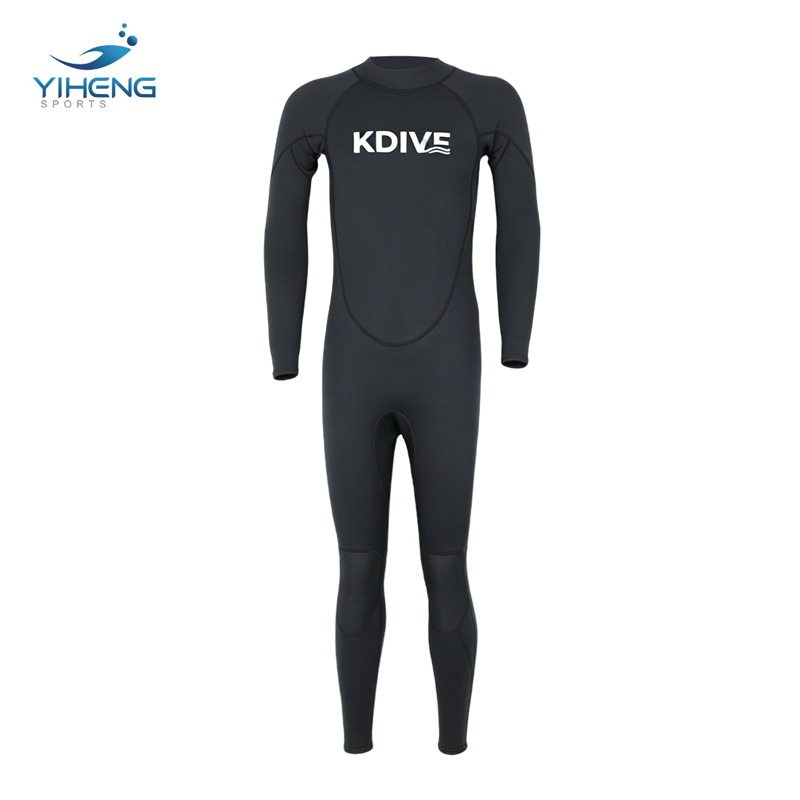
LET’S DEVELOP YOUR NEXT NEOPRENE PRODUCT LINE
Quick Links
Product Categories
Contact Us
-
 Email: postmaster@yihengsport.com
-
 Mobile: +86-13564100539
-
 No. 480 Jiangping Road, Madian, Binjiang Town, Taixing City, Taizhou City, Jiangsu Province, China.
Copyright © Jiangsu Yiheng Sports Products Co., Ltd. All Rights Reserved
China Wetsuit Manufacturer Neoprene Fabric Manufacturer
