

 Language
 English
  中文简体
中文简体  日本語
日本語  русский
  Español
  عربى
عربى 
Sep, 04, 2026
OEM/ODM Wetsuit Manufacturing Partnership News: What Buyers Should Know in 2026
Scroll through the wetsuit industry headlines of the past twelve months and a pattern appears: partnership announcements between water-sports brands and manufacturers increasingly read like product development alliances rather than plain supply deals. Having followed these OEM/ODM wetsuit manufacturing partnership news cycles from the factory side, our conclusion is direct. The contracts being signed in 2026 reward manufacturers that control their own materials, master a range of construction techniques, and treat customization as standard practice. For procurement teams, learning to read these announcements has become a genuine sourcing skill, because each headline reveals where manufacturing capability is moving and which suppliers are positioned to deliver on it.
What OEM and ODM Wetsuit Partnerships Actually Cover
In the wetsuit trade, OEM and ODM describe two different starting points, and the distinction matters when you compare announcements. Under an OEM arrangement, the brand arrives with finished designs, patterns, and technical packages, and the factory's job is to reproduce them faithfully at scale. Under an ODM arrangement, the manufacturer contributes engineering depth: pattern drafting, material selection, thickness zoning, and construction methods, while the brand supplies market positioning and distribution.
In practice, most current agreements are hybrids. A brand may provide its logo, color standards, and fit blocks while the factory recommends whether a 3mm CR torso panel should pair with 2mm super-stretch underarm panels for mobility. When a headline announces a "strategic partnership," the honest question is which side owns the design intelligence, because that answer tells you what the factory is really being hired to do.
| Aspect | OEM Partnership | ODM Partnership |
|---|---|---|
| Design source | Brand provides specs, patterns, and artwork | Factory develops designs; brand selects and brands them |
| Brand involvement | Heaviest at spec-setting, lighter during production | Heaviest at selection and market testing |
| Factory's core role | Precise, repeatable execution at scale | Co-engineering materials and construction |
| Best suited to | Brands with established fit blocks and tech packs | Brands entering new categories or scaling quickly |
Three Themes Behind 2026 Partnership Announcements
Read side by side, this year's announcements repeat three themes often enough that they should be treated as direction rather than noise.
Customization Has Become the Baseline
The first theme is scope. Customization once meant a printed logo; partnership news now describes full programs covering colorways, custom prints, size curves, packaging, and functional details such as thickness mapping for cold-water zones. Industry coverage notes that customized and functional products have emerged as defining trends across the water-sports goods sector, and the factories winning new partnership deals are those that can absorb this complexity without stretching lead times.
Green Manufacturing Enters the Contract
The second theme is environmental. Language that used to sit in marketing brochures now appears in procurement requirements: lamination processes, adhesive choices, and waste handling are being written into partnership terms. Manufacturers that have invested in cleaner production use those upgrades as headline material, and buyers increasingly treat environmental credentials as risk management rather than a bonus. Reviewing a supplier's sustainability commitments with the same seriousness as its price list has become standard practice among experienced sourcing teams.
Supply Chains Are Concentrating Toward Source Factories
The third theme is consolidation. Foreign trade reporting through 2026 describes supply chains concentrating around manufacturers that control more of the production chain, because every extra intermediary adds cost, delay, and communication risk. That is why partnerships announced directly with source manufacturers, meaning factories that laminate their own neoprene fabric and sew their own finished goods, draw attention from procurement teams. Fewer handoffs mean tighter quality control and more predictable delivery dates.
What a Product Line Reveals Before You Sign
Announcements tell you what a factory wants to be known for. Its catalog tells you what it can actually do, and three signals deserve a close look.
The first is material control. A partner that produces its own neoprene fabric, in thicknesses from 2mm to 9mm, in both SBR and CR grades, and laminated with nylon or polyester jersey, can adjust a specification in days instead of waiting on an upstream supplier. That vertical control is the practical difference between a trading company and a manufacturer, and it shows up directly in sampling speed and tolerance consistency.
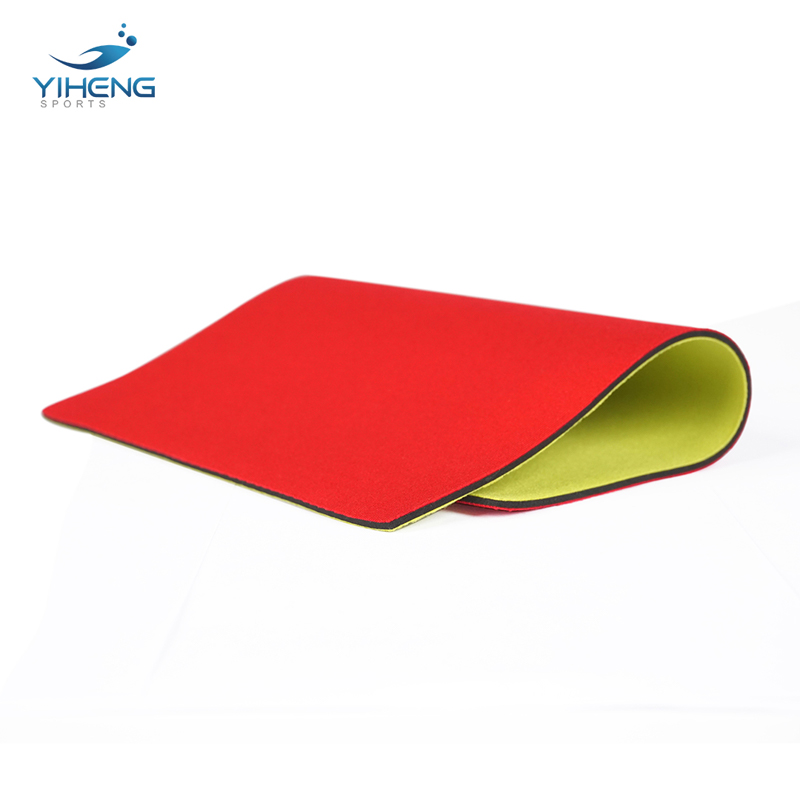 2mm-9mm Four-Way Stretch CR Neoprene Premium Wetsuit Raw MaterialMade from 100% pure CR closed-cell foam laminated with four-way stretch jersey, this neoprene comes in 2mm-9mm thicknesses. In-house material control like this supports fast sampling and consistent specifications across wetsuit projects.View Product →
The second signal is construction range. GBS (glued and blind-stitched) seams for cold-water warmth, smooth-skin faces that cut wind chill in triathlon suits, and durable sharkskin outer faces for freediving each demand different machinery and operator skill. A catalog spanning all of them indicates a factory that has solved problems across water temperatures and disciplines, not a workshop built around a single product.
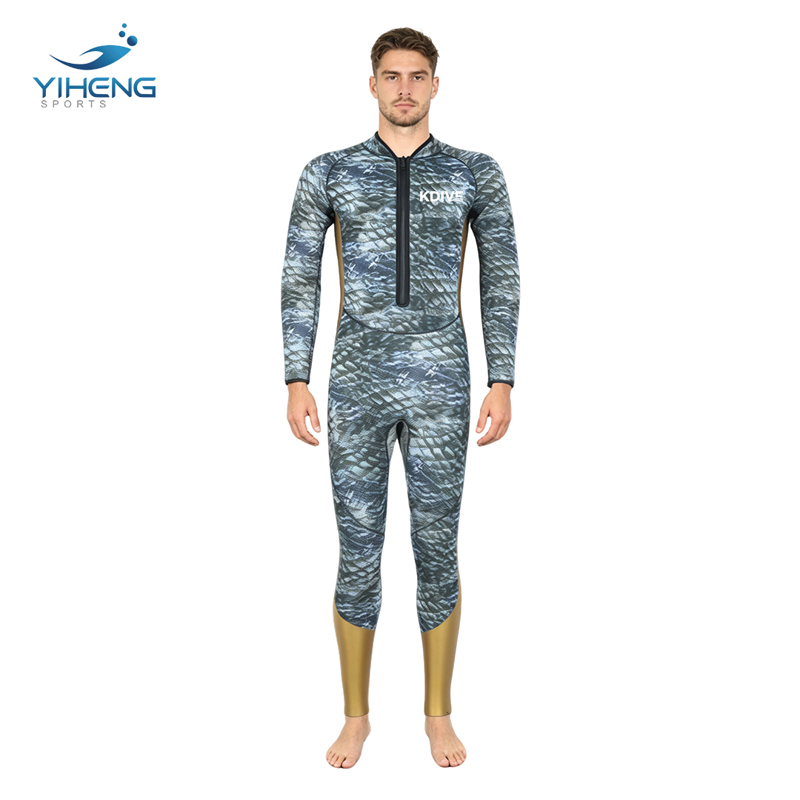 Titan Sharkskin Freediving Wetsuit with 4mm CR NeopreneThis full suit pairs sharkskin embossing and blue camouflage with 4mm CR neoprene, thermal lining, GBS seams, and titanium-coated calf panels. It shows the factory's construction range across water temperatures and freediving disciplines.View Product →
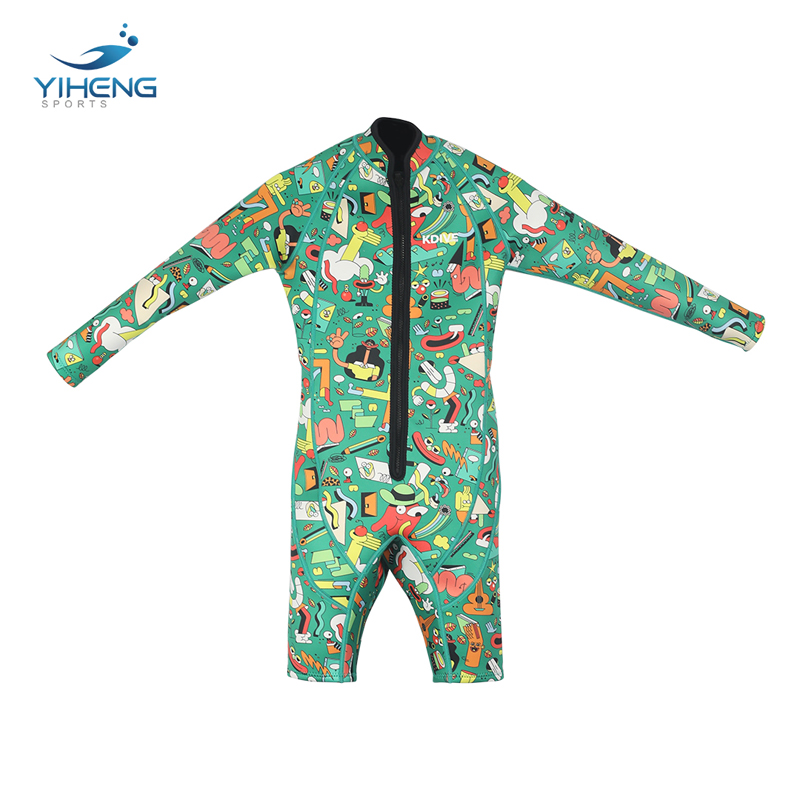
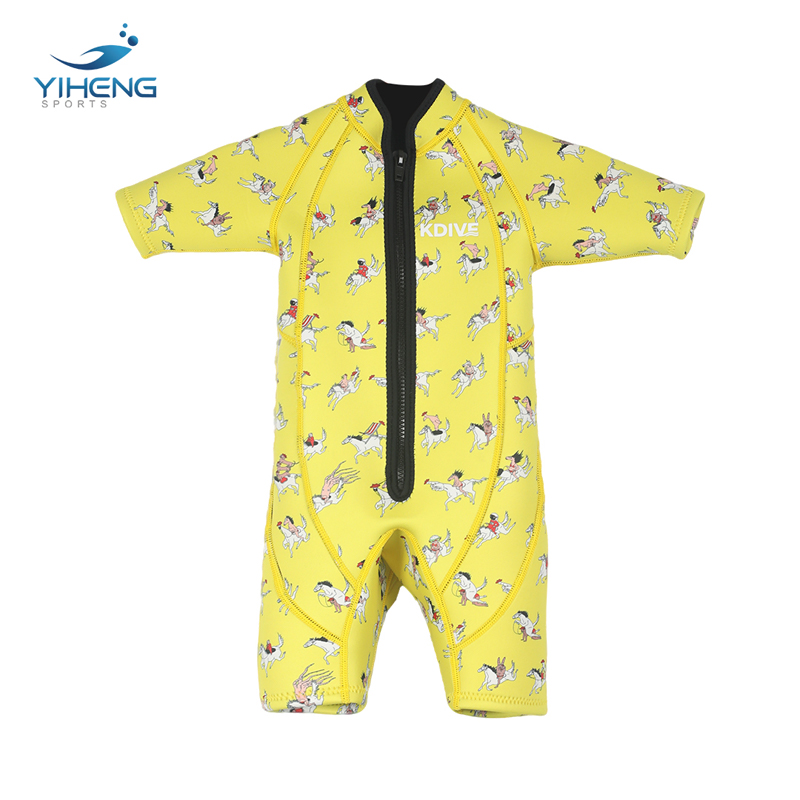
The third signal is visible customization. Cartoon-print children's suits, gradient-print fashion cuts, and contrast-sleeve colorways are small products, yet they demonstrate in-house printing, color management, and small-batch flexibility, which are exactly the capabilities an OEM brand depends on for its own identity.
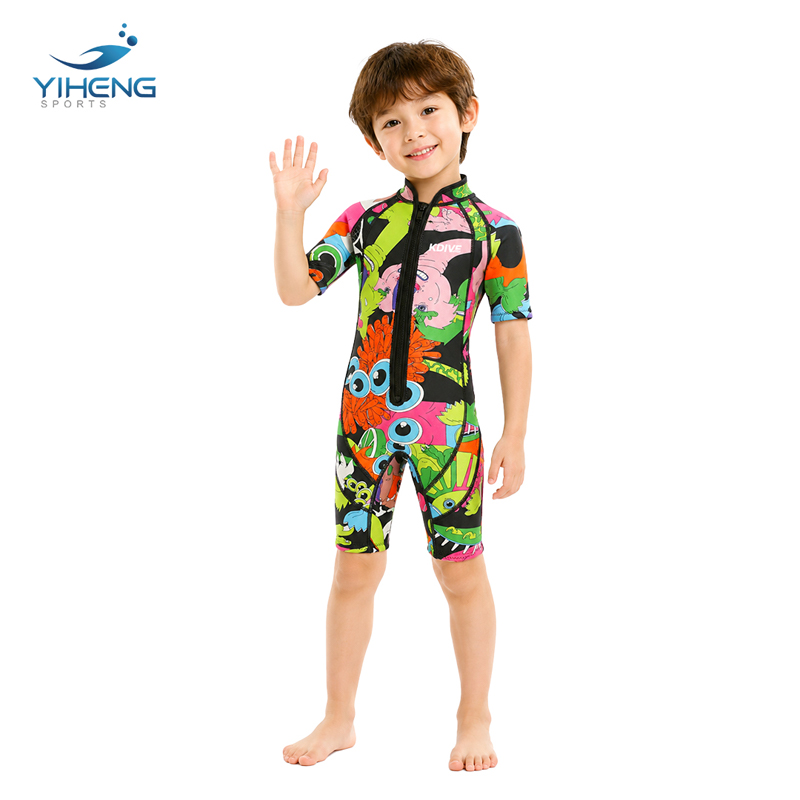 2mm Neoprene Cartoon Print Children Diving WetsuitA 2mm one-piece shorty with cartoon print, YKK chest zipper, and four-needle six-thread flatlock stitching. Its printed, small-batch design demonstrates the in-house customization and flexibility OEM brands rely on for their own identity.View Product →
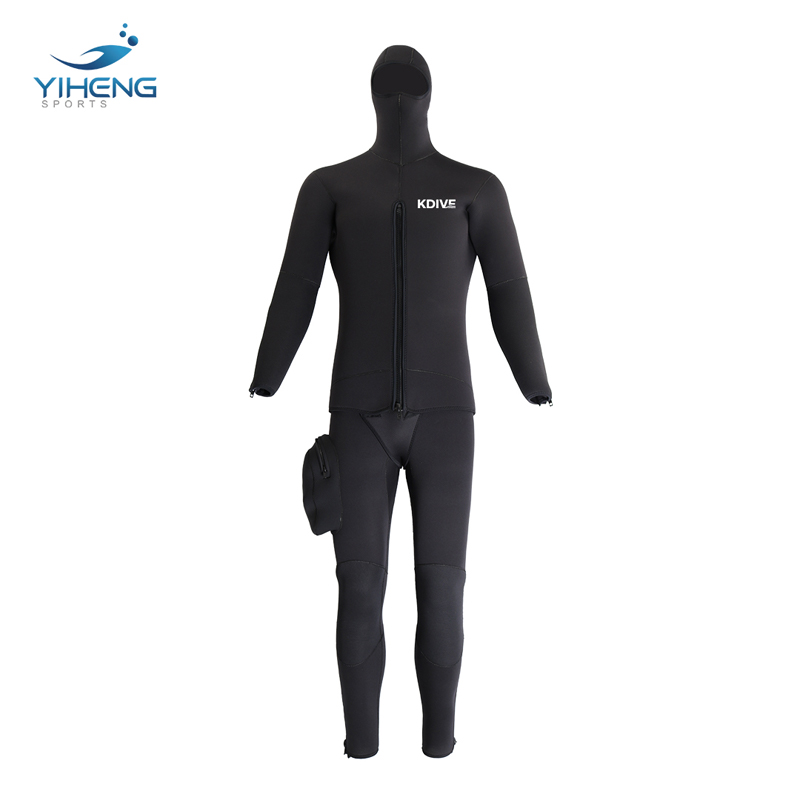
Beyond wetsuits, check whether the factory handles demanding end uses. Professional deep-diving and water-rescue drysuits built on butyl rubber require airtight construction and strict leak testing. A workshop that produces them credibly handles the strictest specifications an OEM client is likely to bring.
How to Qualify a Partner Before the Announcement Goes Public
Partnership news is written after the hard work is done. The checklist below reflects what that work usually contains, and every step can be completed before a single contract is signed.
- Verify the factory itself. Request a factory tour or a live video audit, and confirm that the workshop, workforce, and equipment match what the proposal claims.
- Fix material specifications in writing: CR versus SBR, thickness and tolerance for each panel, lamination type, and stretch targets.
- Match construction methods to your price point, from flatlock seams for warm-water suits to GBS for cold water, and confirm who supplies the glue and tape.
- Agree on a sampling schedule with defined revision rounds before mass production begins.
- Clarify minimum order quantities per size, color, and SKU, because customization multiplies SKUs faster than most brands expect.
- Set quality checkpoints at material intake, inline sewing, and final inspection, and reserve the right to third-party inspection.
- Test response speed and documentation quality during the quotation stage; both predict how the entire partnership will run.
Treated properly, OEM/ODM wetsuit manufacturing partnership news works as a sourcing instrument. It tells you which factories are investing in customization, cleaner production, and vertical integration while others wait, and it gives you a shortlist before trade fairs even open. For brands planning their spring 2027 lines, opening conversations now, ahead of peak-season capacity, is the sensible move.
Yiheng has spent more than fifteen years manufacturing neoprene material and finished water-sports products, from 1mm snorkeling suits to professional ice-diving drysuits, supported by a factory of over 15,000 square meters and a team that understands both production and retail. To discuss material options, request samples, or arrange a visit, reach us through our contact page.
LET’S DEVELOP YOUR NEXT NEOPRENE PRODUCT LINE
Quick Links
Product Categories
Contact Us
-
 Email: postmaster@yihengsport.com
-
 Mobile: +86-13564100539
-
 No. 480 Jiangping Road, Madian, Binjiang Town, Taixing City, Taizhou City, Jiangsu Province, China.
Copyright © Jiangsu Yiheng Sports Products Co., Ltd. All Rights Reserved
China Wetsuit Manufacturer Neoprene Fabric Manufacturer
