

 Language
 English
 中文简体
 日本語
 русский
 Español
 عربى

Oct, 16, 2026
Women's Surf Swimsuits: A Practical Fit, Fabric and Design Guide for Surfers
A women's surf swimsuit has a harder job than most swimwear. It has to stay in place through a duck dive, a wipeout and the long paddle back out, and it still has to be comfortable enough that you forget about it entirely. We have spent more than fifteen years making neoprene suits for surfers, swimmers and snorkelers, and the honest answer is that there is no single best suit. What works depends on the water you paddle in, how long you stay out and how much freedom you want in your shoulders.
Let the Water Choose the Suit
Temperature is the biggest factor, and it is worth checking the local reading rather than guessing. A suit that keeps you comfortable in a 15°C winter swell will be unbearable in a 26°C tropical lineup, and the same logic runs in reverse. The table below is the one we use with new customers when they are planning a range.
| Water temperature | Typical thickness | Styles that work well | How it feels in the water |
|---|---|---|---|
| 24°C / 75°F and above | 1 mm or swim fabric only | Printed bikinis, one-piece swimsuits, rash guards | Light, free through the shoulders, almost no buoyancy |
| 20–24°C / 68–75°F | 1–2 mm | Bikini-cut neoprene suits, shorty springs | Warmth across the core without a full suit |
| 17–20°C / 63–68°F | 2–3 mm | Spring suits, long-sleeve top over bikini bottoms | The most versatile range for year-round surfing |
| 12–17°C / 54–63°F | 3–4 mm | Full suits with a back zip and sealed seams | Reliable warmth for longer sessions |
| Below 12°C / 54°F | 4–5 mm plus hood, gloves, boots | Full suits with GBS seam construction | Built for winter and cold-water breaks |
Wind, sun and session length matter as much as the number on the thermometer. A 20°C day with an offshore breeze feels far colder than a still afternoon at the same temperature, and a three-hour session needs more insulation than a forty-minute one. If you are undecided before a warm-water trip, the thinner option is usually the safer choice, because you can always pull a long-sleeve top over a bikini.
In genuinely warm water, a 1 mm bikini-cut suit is often all you need. It takes the chill off the core without the buoyancy of a full suit, dries quickly between sessions and packs down to almost nothing in a board bag.
 Women's 1mm Blue Print Bikini Neoprene SuitWarm-water bikini-cut suit in 1mm CR neoprene with flatlock seams, front zip and high-stretch fabric; worth viewing when fit and low bulk matter.View Product →
Fit Details That Keep a Swimsuit in Place
Thickness gets most of the attention, but fit is what decides whether you enjoy the session. These are the details we check first whenever we develop a new women's surf swimsuit.
- Seams. Flatlock stitching sits flat against the skin and stretches with you, which suits warm-water bikini cuts. Glued and blind-stitched seams seal water out and are the standard for cold-water full suits.
- Zip or pullover. A back zip is easier to get in and out of and lets you layer a hooded top underneath. A pullover or chest-zip entry keeps more water out and moves more freely across the shoulders.
- Leg openings. A slightly higher cut with a soft gripper inside stops water from ballooning through and keeps the suit from riding up on duck dives.
- Bottoms. High-waisted cuts, boy shorts and classic tie-side bottoms all work. The deciding factor is whether they stay where you put them when you pop up.
- Tops. Cross-back straps, a wide underband and adjustable ties hold better than thin, stretchy strings, especially on a bigger day.
- Neck and underarms. These are the two places chafing starts, so look for smooth seam placement and a neckline that does not sit directly on the collarbone.
Print and colour blocking are not only decoration. A patterned face fabric hides sand, salt and sunscreen marks, which matters if you surf several days in a row and do not want to rinse the suit every evening.
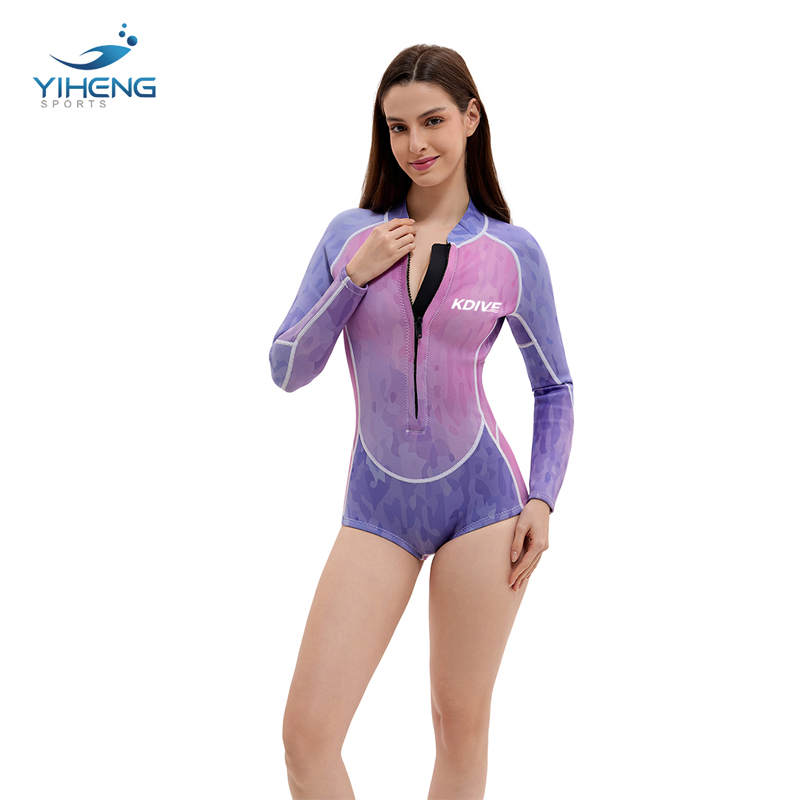 Custom 2mm Purple Gradient Print Bikini Neoprene WetsuitA 2mm CR neoprene bikini cut with thermal plush lining, front zip and purple gradient print; suited to 22–26°C water and extended water sessions.View Product →
Fabric and Feel: What the Suit Is Made Of
Neoprene
Neoprene is a closed-cell foam laminated to a knit fabric on one or both sides. It provides warmth, a little buoyancy and good abrasion resistance. CR grades are softer, stretch further and hold their flexibility for longer, while SBR grades cost less and suit lighter recreational use. Thickness runs from about 1 mm for bikini cuts up to 5 mm and beyond for cold-water full suits, and a super-stretch face fabric makes a real difference to how easily a suit pulls on.
Lycra and swim fabric
For rash guards and warm-water one-pieces, a knit swim fabric with a high elastane content gives the closest, lightest fit. Chlorine-resistant, quick-drying fabric with UPF protection is worth looking for if you plan to spend hours in the sun.
Seams, linings and finishes
Blind-stitched seams, taped seams, smooth-skin panels and sharkskin textures all appear in surf suits, and each one solves a particular problem: warmth, water shedding, drying speed or grip. A suit with the right construction for your water will usually outlast a thicker one with poor seams.
Silhouettes: One-Piece, Two-Piece, Shorty and Long-Sleeve
Once you know your water temperature, the shape of the suit is mostly about personal preference and how much coverage you want.
- Bikini and two-piece neoprene sets: the lightest and coolest option, ideal for warm water and shorter sessions.
- One-piece swimsuits and neoprene one-pieces: good coverage in the surf without extra thickness.
- Shorty or spring suit: short arms and legs, comfortable in the 17–22°C range.
- Long-sleeve top with bikini bottoms: the most adaptable combination, since you can mix and match as the season changes.
- Full suit: a back zip is easier to get into, while a pullover entry gives the most flexibility through the shoulders.
There is no rule that says you have to pick one. Plenty of surfers keep a bikini-cut suit for summer and a 3 mm full suit for winter, and the two together cover almost every condition they will meet.
How We Approach Women's Surf Swimwear
Jiangsu Yiheng Sports Goods started in 2008 with neoprene fabric and semi-finished materials, and we still laminate our own sheeting in thicknesses from 2 mm to 9 mm in both SBR and CR. From there we build finished suits across surfing, all-purpose, SUP, snorkelling, freediving and kids lines, in sizes that run from children's to plus-size adult patterns.
Because the fabric and the finished garment come out of the same facility, thickness, lining, seam type and print can all be adjusted without sending a project through a chain of suppliers. That flexibility matters more than it used to. Our industry notes on custom and functional product development explain how buyers are moving away from plain black stock suits towards specific prints, panel layouts and seam configurations, even at modest order volumes.
For a women's surf suit, that usually means a conversation about four things: the water temperature where the suit will be sold, the level of stretch required, how the top and bottoms need to sit together, and the print or colour direction. Everything else follows from those answers.
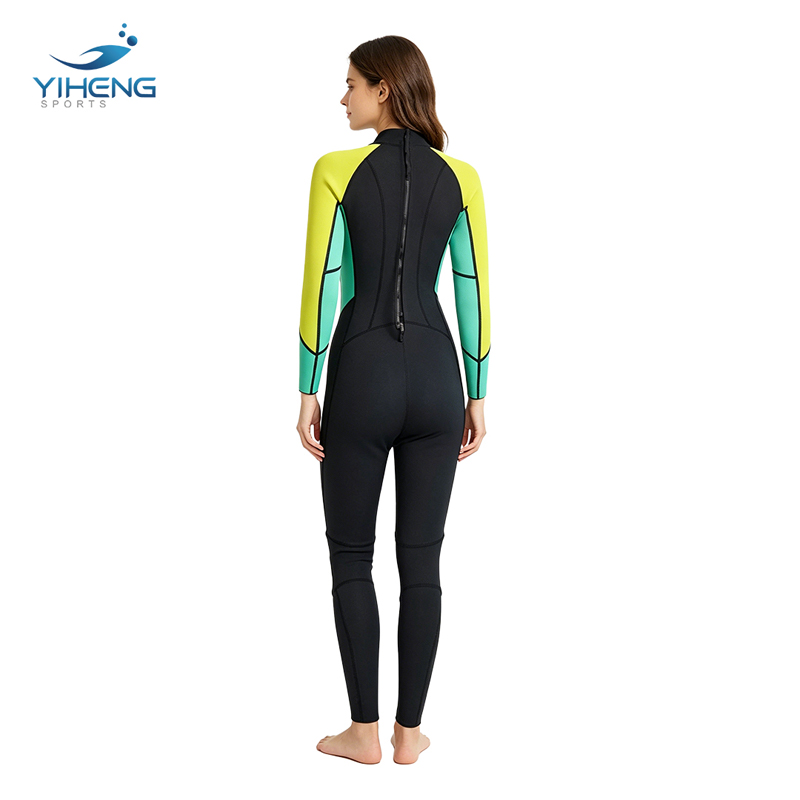 Custom 3mm Women's CR Neoprene Wetsuit with Green-Yellow SleevesA full-length women's 3mm CR neoprene suit with green-yellow contrast sleeves, stretch arm panels, flatlock seams, back zip and knee pads for active water sports.View Product →
Care Habits That Add Seasons to a Suit
Neoprene is durable, but it does not like heat, detergent or direct sun. A few simple habits will keep a suit fitting the way it did in its first month.
- Rinse in cool fresh water after every session, inside and out.
- Wash occasionally with a mild, non-detergent soap. Never use hot water or a washing machine.
- Dry flat or on a wide hanger, out of direct sunlight, and never in a tumble dryer.
- Store loosely folded, away from heaters and petroleum products.
- Use a little neoprene lubricant at the wrists and ankles if a suit is tight, rather than pulling hard on the seams.
Swim fabric is easier: a cool rinse after each use and air drying away from radiators will keep the elastane working for years. Sunscreen and salt are the two things that age a suit fastest, so rinse them out sooner rather than later.
Choosing a women's surf swimsuit really comes down to matching the suit to your water and your session, then checking the details that keep it in place once you are out there. Thickness, seam construction and the way the top and bottoms fit together matter far more than a brand name on the chest. If you are building a range and want help narrowing down thickness, fabric or sizing, or if you simply want a sample in your hands before you commit, get in touch with our team and we will walk through it with you.


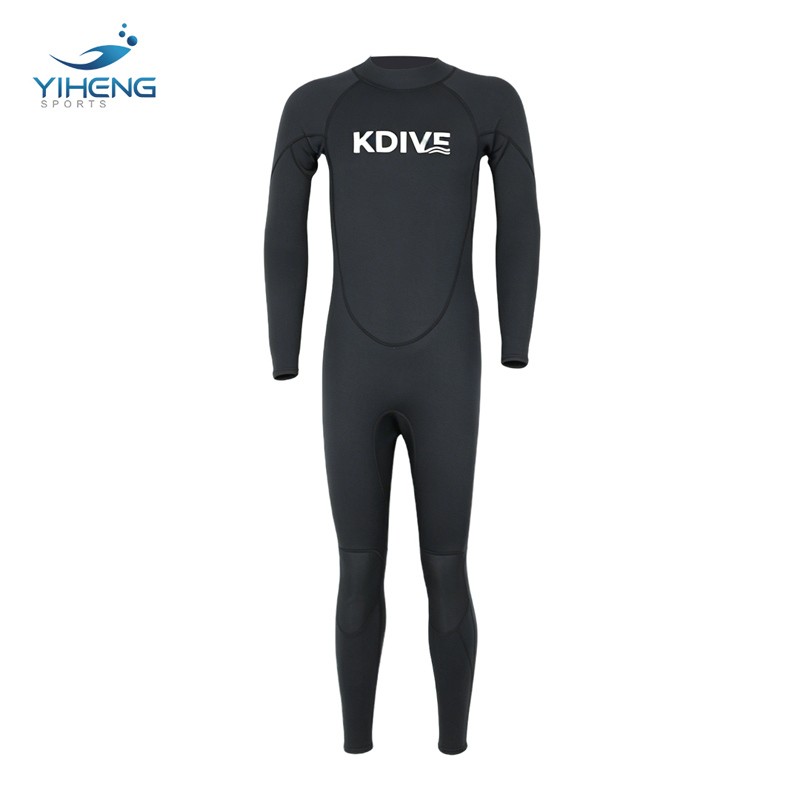
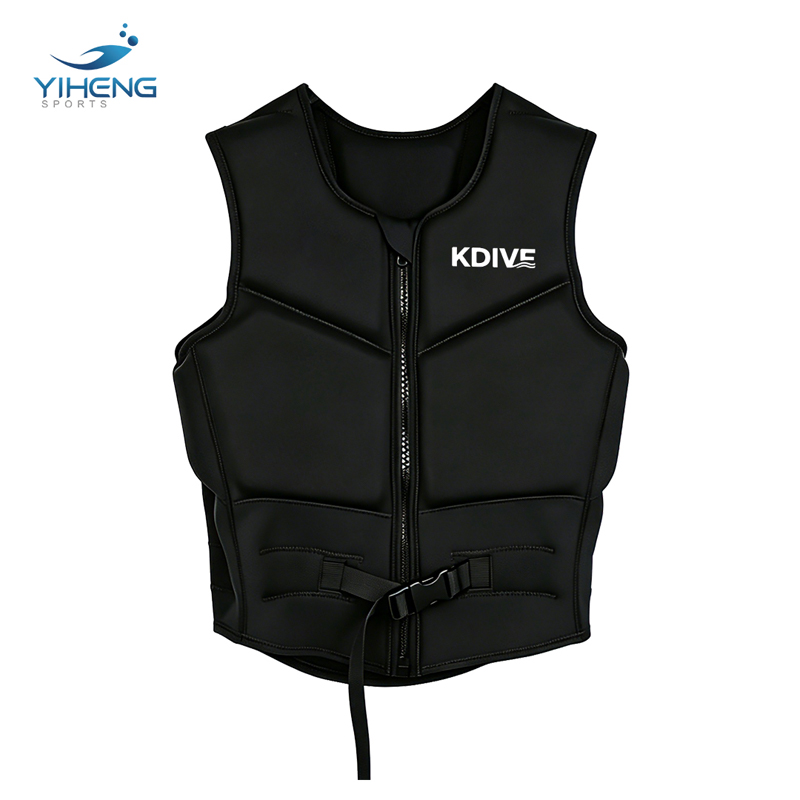
LET’S DEVELOP YOUR NEXT NEOPRENE PRODUCT LINE
Quick Links
Product Categories
Contact Us
-
 Email: postmaster@yihengsport.com
-
 Mobile: +86-13564100539
-
 No. 480 Jiangping Road, Madian, Binjiang Town, Taixing City, Taizhou City, Jiangsu Province, China.
Copyright © Jiangsu Yiheng Sports Products Co., Ltd. All Rights Reserved
China Wetsuit Manufacturer Neoprene Fabric Manufacturer
