

 Language
 English
 中文简体
 日本語
 русский
 Español
 عربى

Oct, 28, 2026
womens surf apparel: Applications, Selection Criteria, and Practical Guidance
Women's surf apparel looks simple from the beach: a suit, a rash guard, maybe a bikini underneath. In the water it is equipment, and the difference between a long, happy session and a short, cold one often comes down to a few millimetres of neoprene, one seam placed in the right spot, and a cut that follows a woman's body instead of a scaled-down men's pattern.
We have worked with neoprene since 2008, first as a fabric and semi-finished supplier and later as a maker of finished suits, rash guards and water sports gear. That history has taught us something fairly simple: women's surf apparel is not a colourway, it is a pattern problem and a material problem at the same time. This guide walks through both.
What Women's Surf Apparel Actually Has to Do
Shrinking a men's pattern and calling it a women's fit rarely ends well. A suit that is too long in the torso bunches at the lower back, a suit that is too narrow at the bust pulls the shoulders forward, and a suit with no room at the hip rides up every time you duck-dive. The pieces that work tend to share a few quiet design decisions:
- Torso length matched to the pattern rather than stretched into place by the zip.
- Panel shapes that follow the bust, waist and hip separately instead of a straight tube.
- Four-way stretch neoprene that moves with the shoulder rotation of a paddle stroke.
- Softer, thinner edges at the neck, armhole and leg opening, since those are the first places to chafe.
- Seams moved away from the ribs and inner thigh, where pressure is highest when lying on a board.
None of this is marketing language; you feel all of it within the first hour. A well-cut 2mm suit will often keep a surfer happier than a badly cut 4mm one, because comfort is what lets you stay in the water long enough to get warm.
Choosing a Thickness: A Practical Reference
Water temperature is the main variable, but wind, sunshine and how much time you spend sitting still matter just as much. Use the table below as a starting point, then adjust for your own cold tolerance.
| Neoprene thickness | Water temperature | Typical women's pieces | Best suited to |
|---|---|---|---|
| 1mm – 2mm | 24°C / 75°F and above | Bikini-cut suits, printed shorties, rash guards | Tropical trips, warm-water holidays |
| 2/3mm | 20 – 24°C | Long-sleeve spring suits, short-sleeve suits | Summer sessions, shoulder seasons |
| 3mm | 17 – 20°C | Full suits, contrast-sleeve suits | Most of a temperate summer |
| 4mm – 5mm | 12 – 17°C | Hooded full suits, sealed seams | Cold water, long winter sessions |
| Drysuit | Below 12°C | Neoprene or breathable drysuits | Cold-water surfing, rescue and patrol use |
Warm-Water Days: Bikini Cuts, Prints and Shorties
For travel and warm water, many women want something that feels closer to swimwear than to a winter suit. Bikini-cut neoprene gives you buoyancy and a little thermal protection without covering everything, and printed or gradient panels make the piece feel like clothing rather than a uniform. The details worth watching are the waistband (a high, wide band stays put better than a narrow one) and the leg opening (a snug but not tight edge prevents flushing without cutting in).
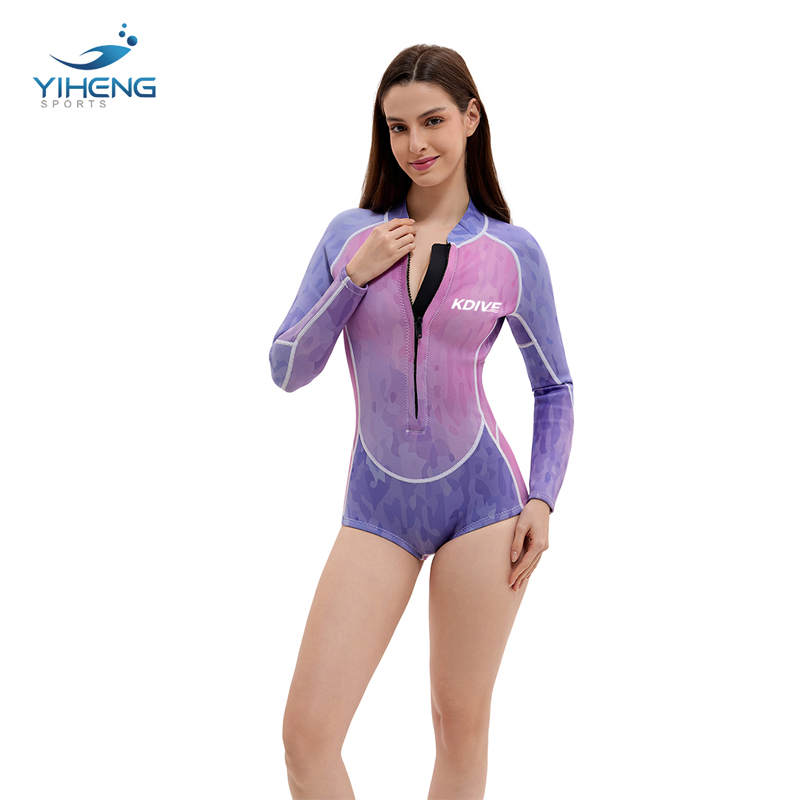 Custom 2mm Purple Gradient Print Bikini Neoprene WetsuitA 2mm bikini-cut suit for warm-water swims and snorkeling, with a purple gradient print and thermal lining for light warmth.View Product →
Printed suits also photograph beautifully, which matters more than it should when you spend half a session on the beach and half of it in the shore break. Just remember that thinner neoprene is more forgiving of fit and less forgiving of cold; if the wind picks up, a 2mm shortie is a better friend than a 1mm bikini suit.
The All-Round 3mm Suit Most Women Actually Need
If there is one piece of women's surf apparel that earns its price, it is a well-made 3mm full suit. Three millimetres of CR neoprene covers the widest range of conditions for most temperate coastlines, and it is thick enough to stay warm on a cloudy morning yet flexible enough to paddle in. Look for a back zip or chest zip that closes without help, a slightly dropped shoulder so the armhole does not bite, and knee panels that reinforce the area in contact with the board.
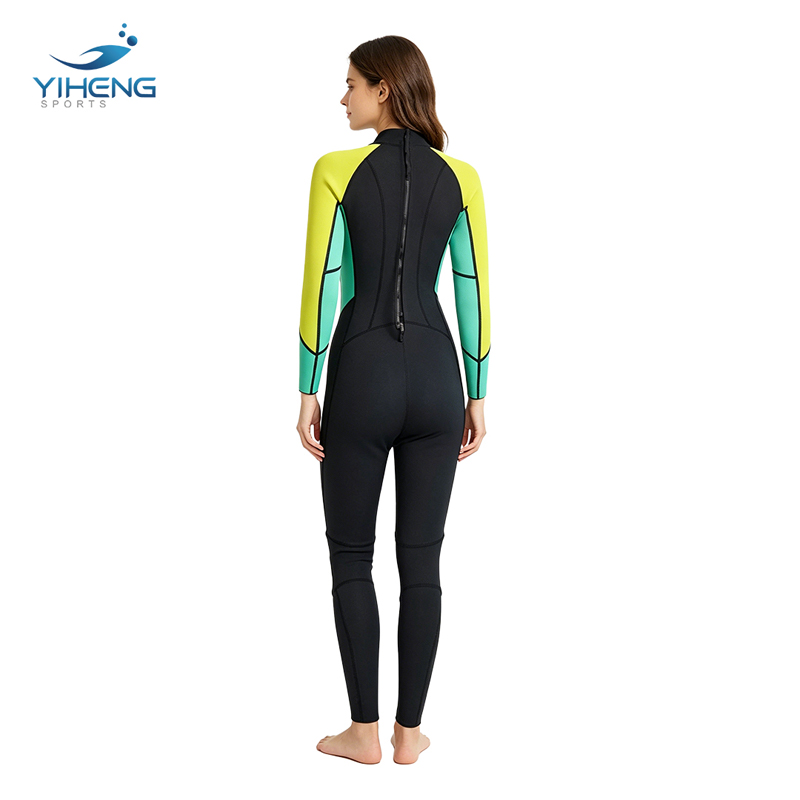 Custom 3mm Women's CR Neoprene Wetsuit with Contrast SleevesA 3mm full women's wetsuit with green-yellow contrast sleeves, back zip and reinforced knees for surfing, swimming and paddling.View Product →
Colour blocking is more than decoration here: contrast sleeves help you find a partner in choppy water and show quickly whether the panels are cut symmetrically, which is a decent proxy for how carefully the suit was assembled.
Surf-and-Paddle Crossover Days
Plenty of women surf one morning and stand-up paddle the next, and a suit built for paddling is not a compromise at all: it simply moves the stretch where the rotation happens. A long-sleeve one-piece with a flexible back panel and a slightly roomier shoulder gives you that crossover without the batwing feeling of a stiff surfing suit pulled onto a paddleboard.
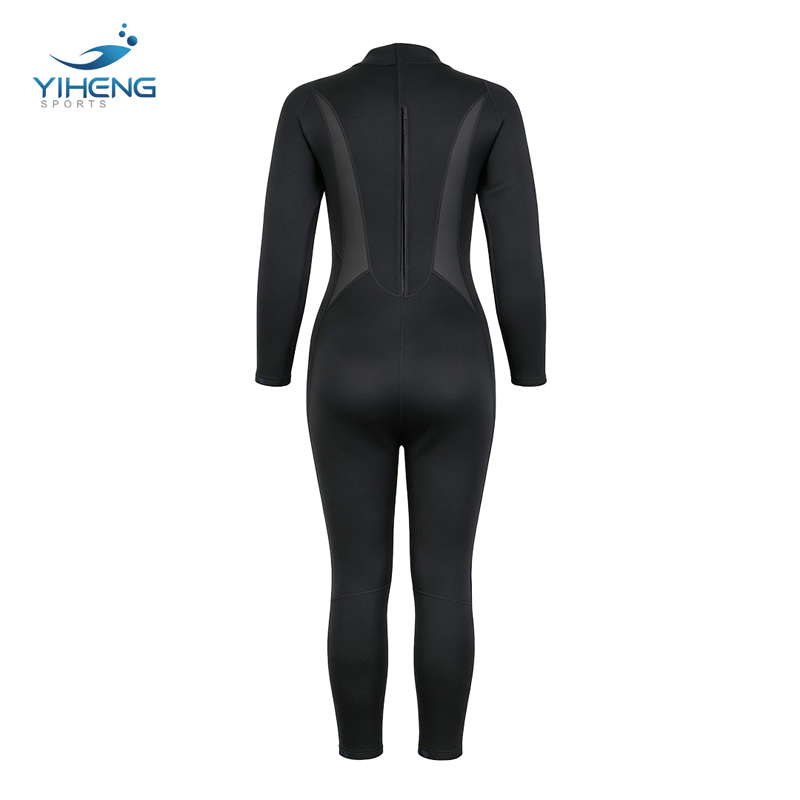 Custom 3mm Black Long Sleeve Women's SUP WetsuitA 3mm one-piece long-sleeve women's SUP suit with segmented tailoring and smooth-skin panels for paddling mobility and reduced drag.View Product →
If your week includes both, keep one suit that is slightly more generous in the upper body and one that is close-fitting for surf, rather than forcing a single suit to do everything.
The Details That Decide Comfort
Seams and stitching
Flatlock stitching is the standard for warm and mid-season suits: strong, flexible and slightly permeable, which is fine when water is not freezing. For colder sessions, GBS (glued and blind-stitched) seams, sometimes taped inside, stop water flushing through the stitch line. Either way, ask where the seam sits; a seam across the ribs is a seam you will feel after two hours on the board.
Zips and entry
A back zip is easy to get into and slightly less flexible across the back. A chest zip keeps more flexibility through the torso but needs a moment to learn. Both work; the one you choose should match how impatient you are in a car park in November.
Layering
Rash guards and quick-dry tops are the quiet workhorses of women's surf apparel. Under a suit they reduce friction and make the suit easier to peel off at the end of a session. On their own they handle sun protection, which is where a UPF50 rating and a hooded cut start to matter more than style.
What Is Underneath the Lining
The lining and lamination tell you a lot about how a suit will age. Nylon jersey laminated to the neoprene gives a smooth, stretchy skin side; polyester tends to be more abrasion-resistant and better value for entry-level pieces. We have written separately about how SCR neoprene laminated with nylon jersey behaves in the water, which is worth a read if you are comparing fabric quality rather than just colours.
Making a Suit Last More Than One Season
Neoprene is durable, but it is not immune to hot cars, chlorine or rough handling. The routine that keeps women's surf apparel usable for years is short:
- Rinse in cool fresh water after every session, inside and out.
- Wash occasionally with a mild wetsuit shampoo, never detergent or fabric softener.
- Dry on a wide hanger, out of direct sun, never on a radiator.
- Store loosely folded rather than compressed under heavy gear.
- Repair small nicks early with neoprene cement before they open into tears.
Do this and a 3mm suit will comfortably outlast its first owner's enthusiasm for dawn patrols.
For Brands Building a Women's Surf Line
Most of the women's pieces in our catalogue started as a conversation with a brand about a specific coastline, water temperature and customer. Because we make the neoprene fabric, laminate it and then cut the finished suit in the same factory, changes to thickness, panel layout, print placement or seam construction can be handled in one place rather than across three suppliers. That shortens sampling rounds considerably, and it makes small fit adjustments realistic instead of expensive.
If you are planning a women's line and want to talk through thickness grading, patterns or fabric options, reach us through our contact page and we will point you to the right starting sample.
Women's surf apparel has improved enormously in the last decade, mostly because more women stayed in the water long enough to demand better patterns. Choose thickness for the water, cut for your body, and details for the conditions, and the suit becomes something you stop thinking about. That is exactly what good gear should do.
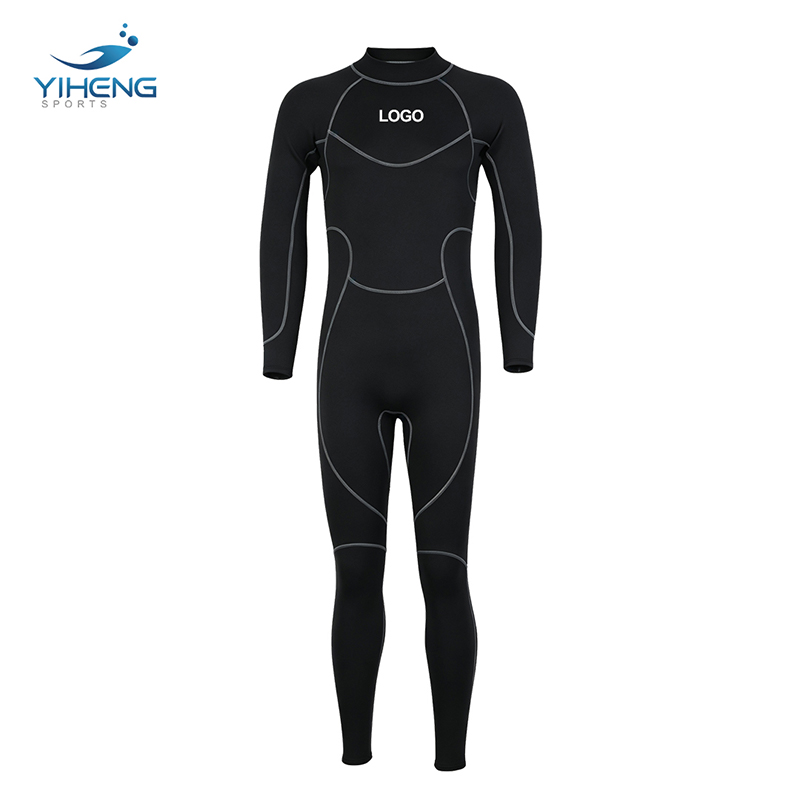

LET’S DEVELOP YOUR NEXT NEOPRENE PRODUCT LINE
Quick Links
Product Categories
Contact Us
-
 Email: postmaster@yihengsport.com
-
 Mobile: +86-13564100539
-
 No. 480 Jiangping Road, Madian, Binjiang Town, Taixing City, Taizhou City, Jiangsu Province, China.
Copyright © Jiangsu Yiheng Sports Products Co., Ltd. All Rights Reserved
China Wetsuit Manufacturer Neoprene Fabric Manufacturer
