

 Language
 English
 中文简体
 日本語
 русский
 Español
 عربى

Oct, 23, 2026
Gore-Tex Material: How Waterproof Breathable Fabric Works in Watersports
We have spent more than fifteen years cutting, laminating and sewing closed-cell foam, and the question we hear most often when a customer brings up Gore-Tex material is deceptively simple: do you want to stay dry, or do you want to stay warm? On the water those are two different problems, and they are solved by two different families of material. Gore-Tex belongs firmly to the first. Our own working world of neoprene belongs mostly to the second.
Knowing where that line falls helps buyers specify the right garment instead of paying for properties a diver or a paddler will never use. Here is what the material actually is, how it behaves once it becomes a suit, and how it compares with the foam we handle every day.
What Gore-Tex Material Actually Is
Gore-Tex is a family of waterproof, breathable materials built around a membrane of expanded polytetrafluoroethylene, almost always shortened to ePTFE. PTFE is the same polymer used in non-stick cookware. In the late 1960s, researchers at W. L. Gore & Associates found that stretching the polymer rapidly produced a microporous structure rather than a solid film, and that discovery became the basis of the material sold under the Gore-Tex name today.
The structure is what makes it interesting. Stretched PTFE forms a web of fine fibrils with pores measured in fractions of a micron: far too small for a droplet of liquid water to push through, yet large enough for a molecule of water vapor to slip past. In practical terms, the membrane stops wind and rain from getting in while letting perspiration escape from the inside. It is also extraordinarily light, which is why the technology moved quickly from outdoor jackets into drysuits, waders and technical shells.
One point is worth repeating to anyone new to the material: the membrane on its own is not a fabric. In a finished garment it is bonded to a face fabric and usually a lining, and every seam has to be sealed. Those construction steps, not the membrane alone, decide whether the finished piece performs as promised.
When buyers request specifications, they usually receive two figures. Hydrostatic head describes how much water pressure the laminate resists before leaking. A breathability value such as RET or MVTR describes how readily vapor moves through. A high hydrostatic figure paired with poor breathability gives you a garment that keeps the rain out and traps sweat inside, which is why the two numbers should always be read together.
| Property | ePTFE membrane laminate (Gore-Tex type) | Neoprene sheet (CR) |
|---|---|---|
| Water resistance | Very high; holds back liquid water under pressure | Water-resistant as a sheet; seams, zips and stitching are the weak points |
| Breathability | High; vapor passes through the micropores | Low; closed-cell foam does not vent vapor |
| Stretch and recovery | Limited; patterning and cut do the work | High; four-way stretch follows body movement |
| Thermal insulation | None on its own; depends on base and mid layers | Built in; the gas cells inside the foam hold warmth |
| Insulation when wet | Falls sharply if the shell floods | Keeps a good share of its warmth |
| Typical garment | Diving and rescue drysuits, sailing shells, breathable waders | Wetsuits, bootfoot waders, hoods, gloves |
| Repair approach | Patch and re-tape; damage stays local | Adhesive or blind-stitch repair; abrasion is the main enemy |
Neither column is better in absolute terms. They answer different questions, and the right answer depends on where the garment will be worn.
From Membrane to Garment: What Happens on the Line
Three layers or two
Most laminates arrive in one of two builds. A two-layer construction bonds the membrane to the outer fabric and protects the inside with a loose lining, which is comfortable and forgiving but slightly bulkier. A three-layer construction sandwiches the membrane between the face fabric and a thin backing scrim, producing a lighter and more durable package that suits drysuits and technical shells. The choice affects weight, stiffness and how the garment drapes once you are moving in it.
Seams and closures decide the outcome
A waterproof membrane with an unsealed seam is a leak waiting to happen. Every needle hole through the laminate has to be covered with seam tape, and every opening should use a water-resistant zip with a storm flap behind it. The same logic runs through our own work. On neoprene we use blind-stitched GBS seams so the needle never passes all the way through the foam, and on drysuits we seal the joints after assembly. Different materials, identical principle: the weakest seam sets the standard for the whole garment.
The surface finish does real work
The outer fabric carries a durable water repellent finish. It does not make the garment waterproof, because the membrane already does that. What it does is stop the face fabric from wetting out, which would otherwise block vapor transfer and make the shell feel cold and heavy. When a suit starts to soak up water in steady rain, the finish has usually worn away rather than the membrane having failed.
Where Gore-Tex Material Fits in Water Sports
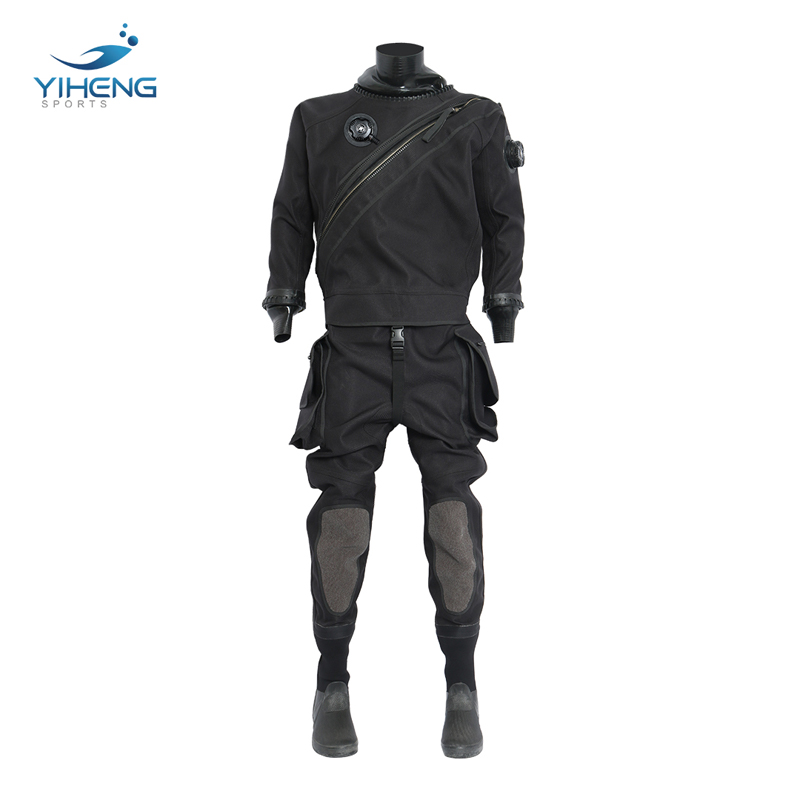
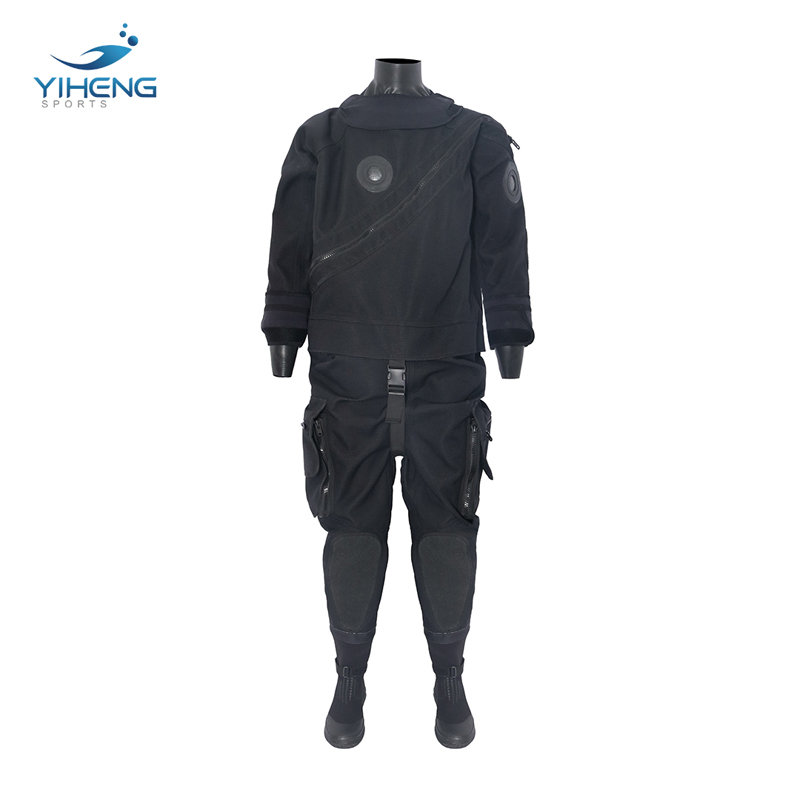
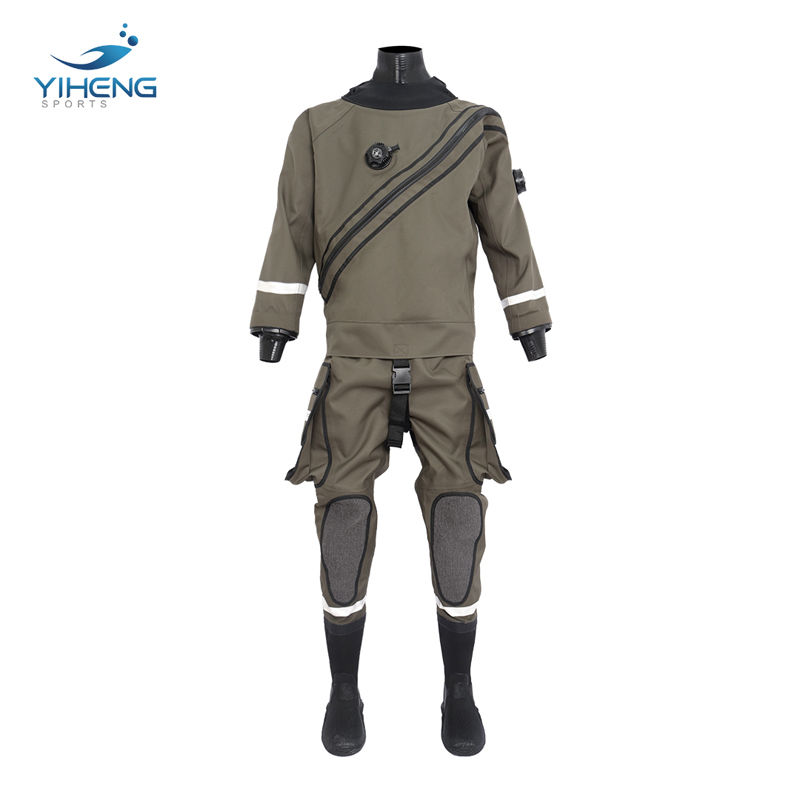
Because the material is a dry barrier rather than a thermal layer, it appears wherever the goal is to keep water out and let sweat escape. That means diving drysuits for cold or contaminated water, rescue and surface-swimming drysuits, sailing and paddling shells, and breathable chest waders. In a drysuit the membrane handles waterproofing, and the warmth comes entirely from what is worn underneath: a base layer plus an insulating undersuit chosen for the water temperature.
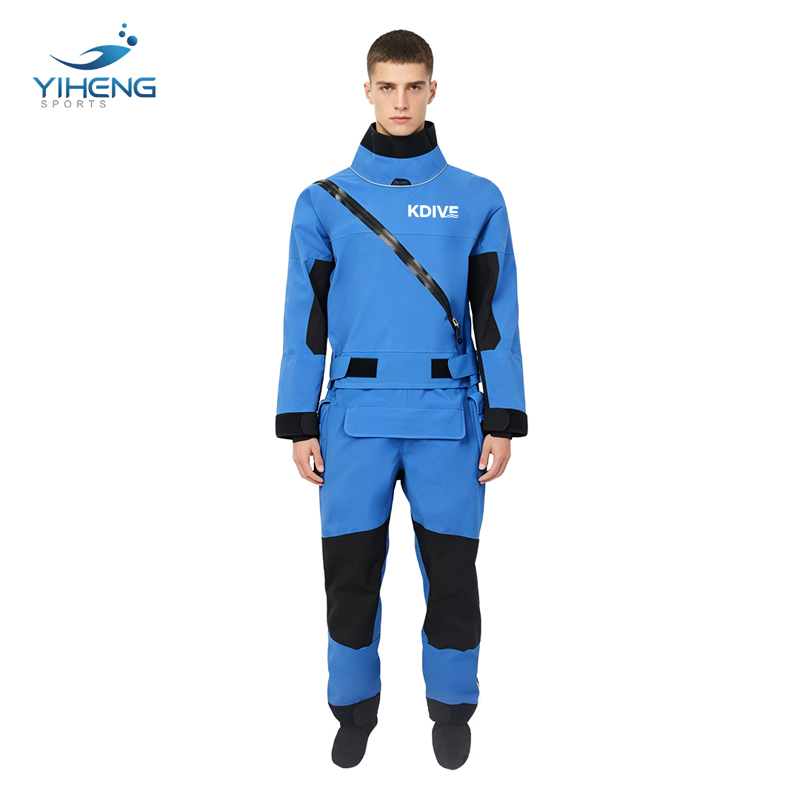 Blue Rescue Breathable Drysuit for Professional Water OperationsA breathable laminated rescue drysuit with sealed seams and reinforced elbows, hips and knees for long, active water work.View Product →
Our breathable drysuits follow that same division of labour. The shell is responsible for keeping water out, and the wearer's layering is responsible for warmth, which makes the suit adaptable across a surprisingly wide range of conditions simply by changing what goes underneath.
Gore-Tex or Neoprene? Matching the Material to the Water
- Cold water, long immersion, dry skin at the end of the day: a membrane drysuit with a proper undersuit.
- Warm to cool water, constant movement, tighter budget: a neoprene wetsuit, where the foam insulates and a little flushing is part of the design.
- Rescue and surface work where the suit stays on for hours: a breathable shell, because trapped vapor becomes the limiting factor.
- Wading with long walks to the water: breathable waders for the approach; neoprene bootfoot waders for cold rivers and rough ground.
- Abrasion-heavy work with rocky entries and exits: neoprene shrugs off scrapes better and can be repaired with adhesive on the bank.
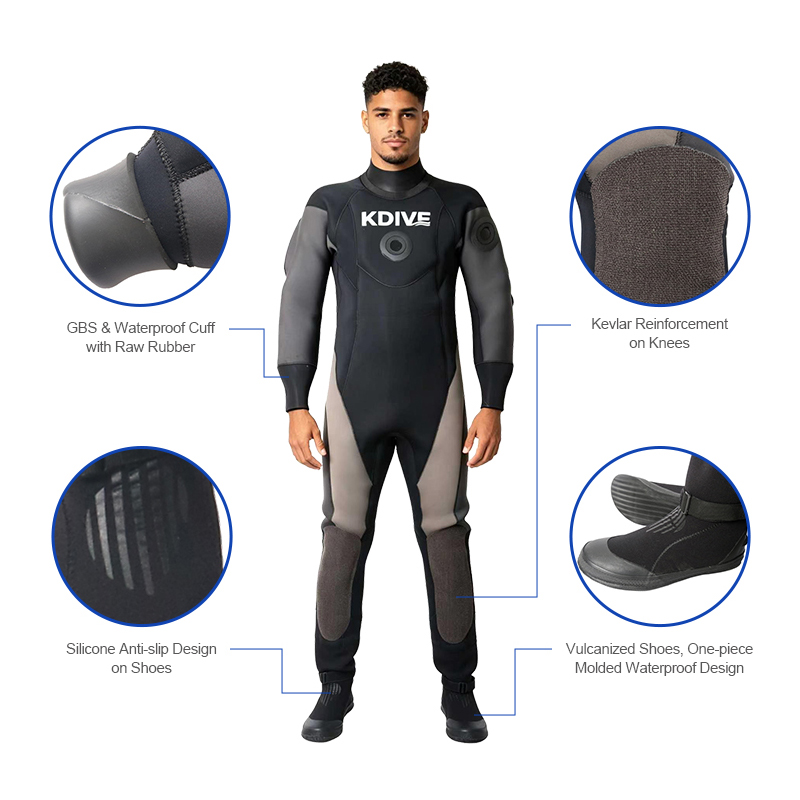 GBS Explorer Thermal Neoprene Drysuit for Cold WaterA neoprene drysuit with thermal fleece lining, sealed GBS seams, Kevlar reinforcements and integrated anti-slip boots for cold-water use.View Product →
Where the two worlds meet, a neoprene drysuit is often the practical answer. The foam shell still insulates if a little water finds its way in, and it tolerates rough handling at the entry point far better than a thin laminate. Our GBS Explorer thermal drysuit sits in that space, with blind-stitched seams and a thermal build aimed at cold water.
Getting Years Out of a Membrane Garment
Durability is mostly maintenance, and the routine is shorter than most people expect:
- Rinse the suit in fresh water after every use, especially after salt water or chlorinated pools.
- Wash occasionally with a mild technical detergent. No fabric softener, no bleach, no powder that leaves residue in the pores.
- Rinse thoroughly and hang to dry away from direct sun and direct heat.
- Refresh the water repellent finish when water stops beading on the surface, using a spray-on or wash-in treatment suited to the fabric.
- Store loosely folded or hanging, away from hot vehicles and heavy compression.
- Inspect seam tape and zips once a season, and repair small nicks before they become leaks.
The Environmental Side of ePTFE
Waterproof breathable membranes carry an environmental story that buyers should understand rather than avoid. ePTFE is a persistent material, and the broader family of fluoropolymers has come under increasing regulatory attention in several markets. Water repellent finishes are also shifting away from long-chain chemistry toward shorter-chain and fluorine-free alternatives, and many brands now publish exactly which finish sits on their face fabrics.
Recycling is the harder problem. A three-layer laminate bonds different polymers together, and separating them at end of life is difficult and energy-intensive. Take-back programmes exist in some regions, but the most reliable environmental gain is still longevity: a well-built suit that lasts eight or ten seasons uses far fewer resources than three that fail early. That is an argument for careful seam sealing and honest specification as much as for material choice.
Notes From Our Own Factory Floor
We are a neoprene manufacturer, so we do not produce ePTFE membranes. What we do produce is the other half of the equation: laminated neoprene sheet, GBS-seamed wetsuits and drysuits built for cold water and hard use. Many of our customers run both kinds of programme, a breathable shell at the top of the range and neoprene through the rest, and their questions tend to be consistent. What is the real water temperature? How long is the wearer actually immersed? Will the garment be worn over an undersuit or against skin? How abrasive is the entry and exit environment?
Those four answers usually settle the material choice before price enters the conversation. When the direction is neoprene, the next decisions are thickness, cell structure and surface treatment, which is where our experience with laminated constructions comes in. If you want a sense of how the sheet itself is put together, this overview of how laminated neoprene fabric is used across product types is a reasonable starting point.
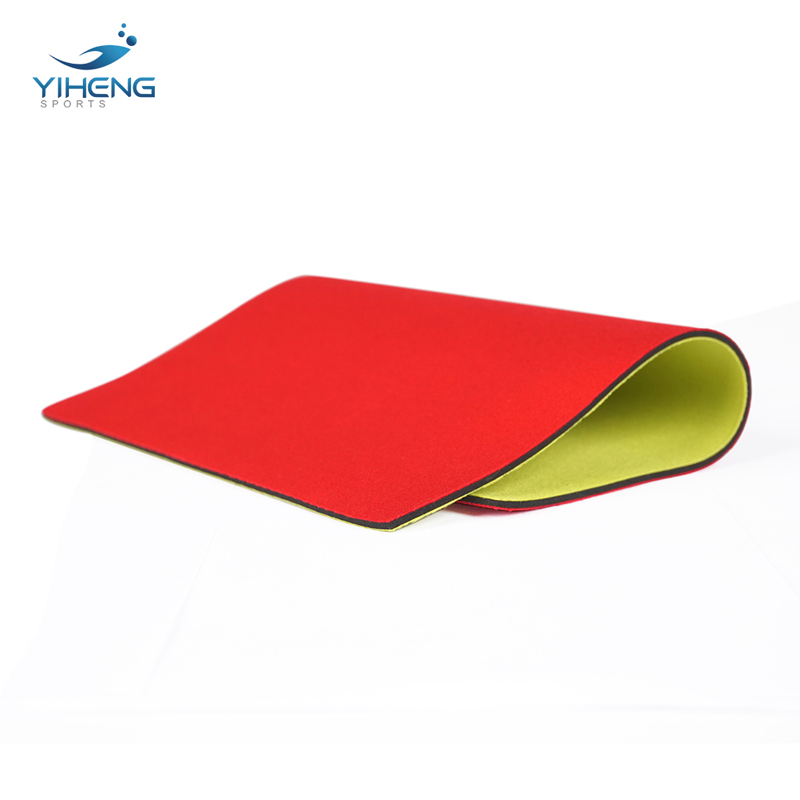 Custom 2mm–9mm Four-Way Stretch CR Neoprene SheetA pure CR closed-cell neoprene sheet with four-way stretch lamination, offered in multiple thicknesses for premium wetsuit development and sampling.View Product →
For most of our customers the deciding factor comes down to the brief rather than the brochure: a four-way stretch CR sheet in the 2 mm to 9 mm range gives a designer enough room to work with thickness, seam type and lining without changing suppliers halfway through development.
None of this makes one material better than the other. Gore-Tex material solves the problem of staying dry and breathing at the same time, and it does that job better than almost anything else on the market. Neoprene solves the problem of staying warm in water that would otherwise end the day early, and it does so with a simplicity that is hard to beat on price or on repairability. Most serious watersports ranges end up using both, each in the place where it earns its keep.
If you are weighing a breathable membrane shell against neoprene for an upcoming line, we are glad to talk through thickness, seams, linings and construction. Fifteen years of cutting foam teaches you where the small decisions turn into warranty claims, and we would rather share that early than after the first container ships. Get in touch with our team and describe the water your customers actually swim in.

LET’S DEVELOP YOUR NEXT NEOPRENE PRODUCT LINE
Quick Links
Product Categories
Contact Us
-
 Email: postmaster@yihengsport.com
-
 Mobile: +86-13564100539
-
 No. 480 Jiangping Road, Madian, Binjiang Town, Taixing City, Taizhou City, Jiangsu Province, China.
Copyright © Jiangsu Yiheng Sports Products Co., Ltd. All Rights Reserved
China Wetsuit Manufacturer Neoprene Fabric Manufacturer
