

 Language
 English
 中文简体
 日本語
 русский
 Español
 عربى

Oct, 10, 2026
Is Gore-Tex Really Waterproof? How the Membrane Works and When It Fails
If you have ever stood in a cold downpour and watched water bead up and roll off your jacket, you already know why people ask whether Gore-Tex is waterproof. The short answer is yes: the membrane itself does not let liquid water through in normal use. The longer answer is that a waterproof membrane sitting inside a jacket with unsealed seams, a tired zip and a worn-out surface finish is not the same thing as waterproof clothing.
We have been building neoprene gear for people who spend their time in and around water since 2008, and the question of what "waterproof" really means comes up almost every week. So here is a plain-language look at how the membrane works, where its waterproofing stops, and how it compares with the closed-cell materials we use every day for wetsuits, drysuits and waders.
Is Gore-Tex Waterproof? The Short Answer
Yes. The Gore-Tex membrane is a waterproof, windproof and breathable film. Liquid water cannot pass through it under ordinary conditions, which is why it is used in rain shells, boots, gloves and hats. The membrane is not the part that usually fails you, though. The finished garment is.
Three things decide whether you actually stay dry:
- Seam sealing. Every stitched seam is a line of needle holes. If those holes are not taped or otherwise sealed, water will find them long before it finds the membrane.
- Zips and closures. Water-resistant zippers, storm flaps, adjustable cuffs and a properly tensioned hem do a lot of quiet work.
- A durable water repellent (DWR) finish. This factory-applied treatment makes rain bead and roll off the face fabric instead of soaking into it.
It also helps to separate waterproof from water-resistant. A water-resistant jacket shrugs off light rain for a while and then starts to soak through. A waterproof shell is built and tested to hold back a measurable column of water. Those are different promises, and the label usually tells you which one you are buying.
How the Membrane Keeps Rain Out and Lets Sweat Escape
Pores Far Smaller Than a Raindrop
Gore-Tex begins as PTFE that is expanded into a thin film riddled with billions of microscopic pores. Those pores are far smaller than a droplet of liquid water, so water cannot push through them under normal pressure. They are also far larger than a molecule of water vapour, so perspiration in gas form can escape as you move. That is the whole trick: one film, two different behaviours.
The membrane is never used on its own. It is laminated between a face fabric and a lining. In a two-layer build it is bonded to the outer fabric and protected by a separate lining; in a three-layer build it is bonded to both the face and a backer. Both keep water out, but a three-layer construction generally feels drier against the skin and stands up better to abrasion.
Seams, Zips and the Finish
A single jacket can contain metres of stitching, and every needle hole is a potential leak. That is why sealed seams matter more than most shoppers expect. The same logic applies to pockets and zips: if a zip is not water-resistant or covered by a flap, it becomes the weak point.
The DWR finish is the layer people forget about. When it wears away, the face fabric "wets out", the jacket feels heavy and cold, and breathability drops because vapour can no longer escape through a saturated outer layer. Many complaints about a leaking jacket are actually wet-out, and a gentle wash followed by a warm tumble dry often brings the finish back to life.
Reading Waterproof Ratings Without Getting Confused
Waterproof fabrics are usually rated by hydrostatic head, quoted in millimetres. The number describes how tall a column of water the fabric can hold before water passes through it, so a higher figure means more sustained pressure before anything gets in.
| Rating | What it handles | Typical use |
|---|---|---|
| 1,500 to 5,000 mm | Light rain and short exposure | School runs and city commutes |
| 5,000 to 10,000 mm | Steady rain with moderate pressure | Day hikes and wet commutes |
| 10,000 to 20,000 mm | Heavy, sustained rain | Multi-day hiking and exposed coastlines |
| 20,000 mm and above | Driving rain and pressure on the fabric | Alpine weather, sailing and long days outdoors |
Two things the number does not tell you: whether the seams are sealed, and how the fabric behaves once it is creased, compressed or rubbed. A high rating on an unsealed jacket is a nice statistic, not a dry back.
Where Waterproofing Reaches Its Limits
Waterproof does not mean indestructible. Real conditions wear away at any membrane over time:
- Pressure and depth. Hydrostatic pressure increases as you go deeper, and rain shells are not built to resist that. A shell rated for heavy rain is not a diving garment.
- Abrasion. Pack straps, rock, rope and repeated kneeling thin the face fabric and eventually stress the laminate.
- Contamination. Sunscreen, body oils, salt and fine dirt reduce the surface tension of water, which lets it pass through pores it would otherwise be pushed away from. Clean gear performs better.
- Ageing and flexing. Ultraviolet light and thousands of creases at shoulders and elbows take their toll on any laminate.
- Damage. Punctures around shoulders, hips and the seat are the usual entry points, and they are worth repairing early rather than replacing the whole jacket.
An honest expectation: a shell that is cleaned, dried and stored loosely can keep you dry for years, while one that is left crumpled and wet and never washed will disappoint you much sooner.
Gore-Tex and Neoprene Answer Different Questions
This is where our own world touches the membrane world. A Gore-Tex shell is designed to keep rain and spray out while you are active above the water, and to let sweat vapour leave so you do not overheat. It manages the weather. It is not designed to keep you warm in the water.
Neoprene solves the opposite problem, and it does so with structure rather than pores. It is a closed-cell foam, so the gas trapped inside the cells is what insulates. In a wetsuit, a thin layer of water is held against the skin and warmed by the body, while the fit limits flushing. In a drysuit, the neoprene itself becomes the waterproof shell, with seals at the neck and wrists doing the rest. Seam construction is critical: glued and blind-stitched seams, often reinforced with tape, stop water from travelling along the stitch line.
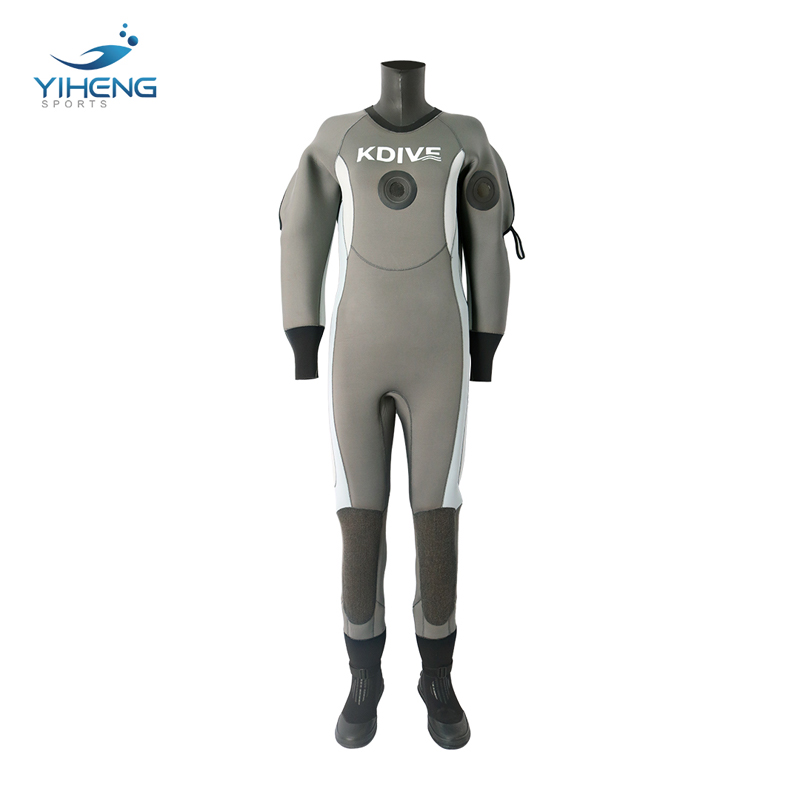
 Professional Airtight Full Drysuit for Cold-Water Marine UseCustom full drysuit with CR neoprene, airtight zipper, sealed seams, reinforced knees and seat, and adjustable boot closures for demanding professional marine activities.View Product →
So the useful follow-up to "is Gore-Tex waterproof?" is "waterproof against what?" Against rain and spray, absolutely. Against immersion, that is a different material and a different design philosophy.
Choosing Gear for Rain, Spray and Immersion
The simplest way to choose is to ask where the water is coming from.
- From above, as rain: a shell with sealed seams, a hood that adjusts, and a hydrostatic head matched to how long you will be out.
- From every direction, as spray and chop: a shell paired with high-waisted trousers, or a drysuit for long sessions in cold water.
- From around you, as immersion: a wetsuit with thickness matched to water temperature and time in the water, a drysuit in genuinely cold conditions, or chest waders for fishing and wading.
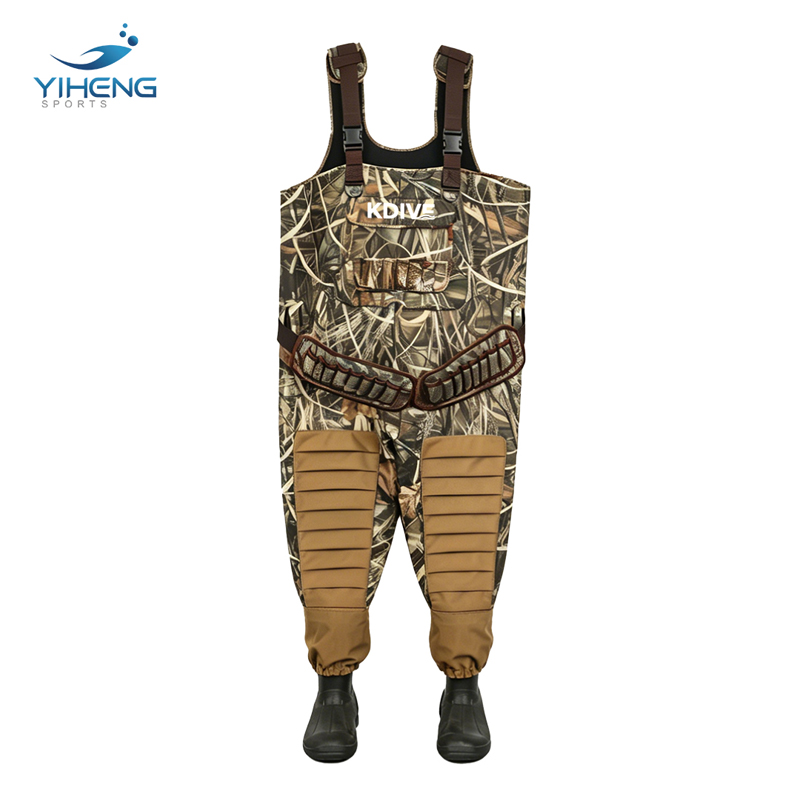
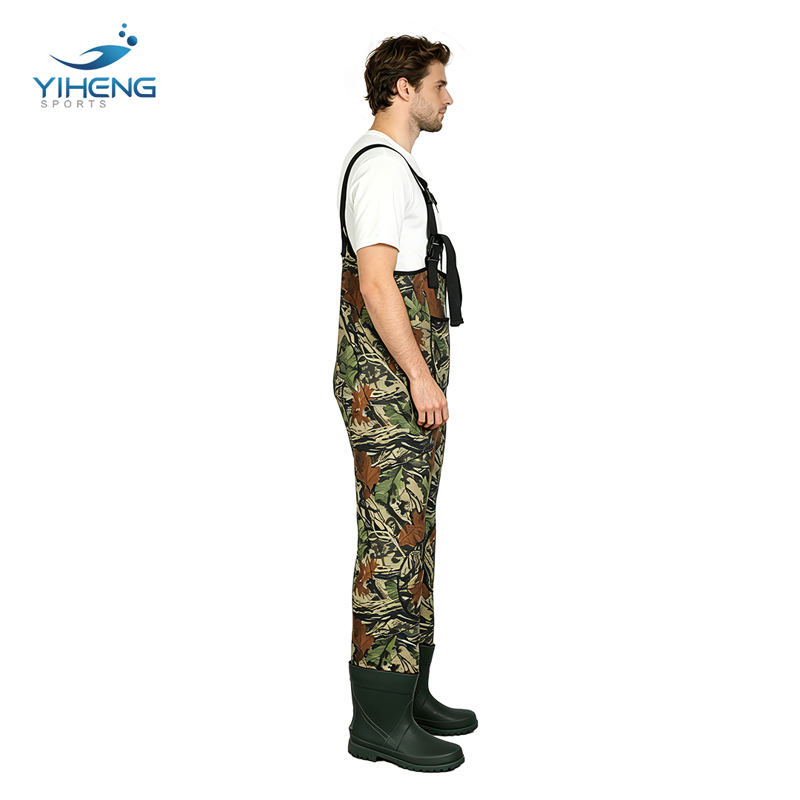 Custom Classic Neoprene Bootfoot Chest Fishing WaderFull-body neoprene wader with cross suspenders, GBS taped seams, reinforced knees, vulcanized rubber boots, and a chest pocket for fishing and wading.View Product →
Fit deserves more attention than the label. A waterproof jacket that is too tight at the shoulders restricts movement and stresses the seams; a wetsuit that is too loose lets cold water flush through, and a drysuit that does not fit properly leaks at the seals regardless of what the fabric is rated for.
A Note for Brands Sourcing Waterproof Materials
If you are a brand or a manufacturer rather than an end user, the waterproofing conversation shifts to fabric construction. Neoprene performance comes down to thickness, cell structure, the balance of CR and SBR content, stretch behaviour and how the material is laminated. A four-way stretch CR sheet with a nylon or polyester backing will behave very differently from a stiff, low-density alternative, and the difference shows up in how the finished suit moves in the water.
 Super Stretch Neoprene Fabric for Wetsuits and Performance GearWholesale CR or SBR/SCR neoprene with four-way stretch lining, available single- or double-lined, smooth-skin, and thermal options for wetsuits and supports.View Product →
We have written more detail on how laminated SCR neoprene is used across different products for anyone weighing up specifications.
Keeping Waterproof Gear Waterproof
- Wash membranes with a mild detergent, no fabric softener and no bleach. Softener coats the surface and works against breathability.
- Rinse wetsuits and waders in fresh water after salt water or chlorinated pools, then hang them to dry out of direct sun.
- Reactivate the DWR by tumble drying on low heat, following the care label, once the garment is clean.
- Check seams, zips and taped joints each season and repair small lift-ups before they spread.
- Store gear loosely in a dry, shaded place and avoid crushing neoprene into tight folds for long periods.
- Keep sunscreen and oils away from membrane surfaces where you can, and wash them off promptly when you cannot.
Frequently Asked Questions
Is Gore-Tex 100% waterproof?
The membrane is, in the sense that liquid water does not pass through it under normal use. The garment is only as waterproof as its weakest seam, zip or damaged panel.
Does Gore-Tex stop being waterproof over time?
The membrane itself does not wear out quickly, but the DWR finish fades, dirt and oils accumulate, and abrasion damages the face fabric. Cleaning and re-treating restores most of the original performance.
Can I wear Gore-Tex gear in the water?
Not as immersion protection. It handles rain and spray very well, but it is not designed to keep you warm and dry while submerged. For time in the water, you want a wetsuit, a drysuit or waders built for it.
Is it worth paying more for?
It depends on your exposure. For occasional light rain, a mid-range shell is usually enough. For long days of hard weather, the combination of reliable waterproofing and consistent breathability is what you are paying for.
Waterproofing is really a chain of small decisions: the membrane, the seams, the closures, the finish, the fit and the way you look after it. When all of them line up, rain simply does not matter. When one of them is neglected, the whole jacket gets blamed.
If you are working out which material suits your conditions, whether that is a rain shell for the hills or a neoprene suit for cold water, talk to our team and we will help you match the gear to the water you actually spend time in.


LET’S DEVELOP YOUR NEXT NEOPRENE PRODUCT LINE
Quick Links
Product Categories
Contact Us
-
 Email: postmaster@yihengsport.com
-
 Mobile: +86-13564100539
-
 No. 480 Jiangping Road, Madian, Binjiang Town, Taixing City, Taizhou City, Jiangsu Province, China.
Copyright © Jiangsu Yiheng Sports Products Co., Ltd. All Rights Reserved
China Wetsuit Manufacturer Neoprene Fabric Manufacturer
