

 Language
 English
 中文简体
 日本語
 русский
 Español
 عربى

Nov, 06, 2026
Swimsuits for Surfing: How to Choose the Right Fit, Fabric and Thickness
Most people find out the hard way: a swimsuit that looks great on the sand behaves very differently once a wave is breaking over your head. Paddling out, duck diving under a set, taking a tumble in the whitewater — every one of those moves pulls at a garment in ways a lounge chair never will. A strap that slips on the beach will slide off your shoulder somewhere in the impact zone.
We have been building neoprene and water-sports apparel since 2008, and the question we hear most often from riders and buyers is refreshingly simple: what should I actually be looking for? The honest answer is that "swimsuit" covers a wide range of garments in surfing, from a minimal two-piece to a 3mm neoprene shorty. The right choice depends on water temperature, session length, and how much movement you plan to do.
Below is the practical version of that conversation — the fit details that matter, the fabrics that survive salt and sun, and how to match a suit to the conditions you actually surf in.
What a Surf Swimsuit Actually Has To Do
A surf garment has three jobs, and they are not the same jobs a pool swimsuit has. First, it has to stay exactly where you put it during forty-five minutes of paddling. Second, it has to protect skin that is already being sanded by wax, salt and board. Third, it has to let your shoulders rotate freely, because a suit that fights your stroke will tire you out long before the current does.
That is why surfers end up with a wardrobe rather than a single favourite suit. A light two-piece is wonderful in warm, glassy water and genuinely dangerous in dumping shorebreak. A neoprene shorty is a gift in a cold spring upwelling and a sauna in the tropics. Matching the garment to the day is the whole skill.
Fit Comes Before Anything Else
No fabric technology compensates for a poor fit. When we cut samples for customers, these are the details we check first, and they are the same ones worth checking in a changing room:
- The band, not the straps. A secure underbust band should hold the top in place on its own. If the suit only stays put when the straps are pulled tight, it will move the moment a wave hits.
- High necks and raglan sleeves. A slightly raised neckline and sleeves that run to the collarbone reduce flushing and stop the suit from peeling away during a duck dive.
- Fixed or firm cups. Soft, loose padding folds and shifts; moulded or removable-but-anchored cups hold their shape when you are pressed against the board.
- Flatlock or blind-stitched seams. Overlocked seams rub under the arms and along the ribs. Flat seams sit flush against skin and reduce chafe on long sessions.
- Leg openings with light compression. Elastic that grips without digging keeps the bottom in place through pop-ups and wipeouts.
- The reach test. Rotate both arms overhead, twist at the waist, and mimic a paddling stroke. Anything that rides up, gaps at the back, or pulls across the chest will only get worse in the water.
One practical note: neoprene relaxes slightly once wet, while jersey-lined lycra tends to hold its shape. If a suit feels borderline tight when dry and it is made of neoprene, that is usually the correct size.
Thickness and Water Temperature
Once you move into neoprene, thickness becomes the single most useful number on the label. More material means more warmth and less stretch; less material means freedom and a shorter comfortable session. As a rough starting point:
| Thickness | Approximate water temperature | Typical use |
|---|---|---|
| 1mm | 22–25 °C / 72–77 °F | Warm tropical sessions, short surfs, layering under a bikini |
| 1.5–2mm | 20–23 °C / 68–73 °F | Longer sessions in warm water, windy coastlines |
| 2–3mm shorty | 18–22 °C / 64–72 °F | Spring and autumn, dawn patrols, beginners and kids |
| 2–3mm full suit | 16–20 °C / 61–68 °F | Repeated daily sessions, early mornings, strong wind |
| 4/3mm and above | Below 16 °C / 61 °F | Cold-water surfing, winter, long sessions |
A 3mm short-sleeve shorty is the classic compromise for mild water: warm enough through the torso, free through the arms, and easy to get out of in a car park.
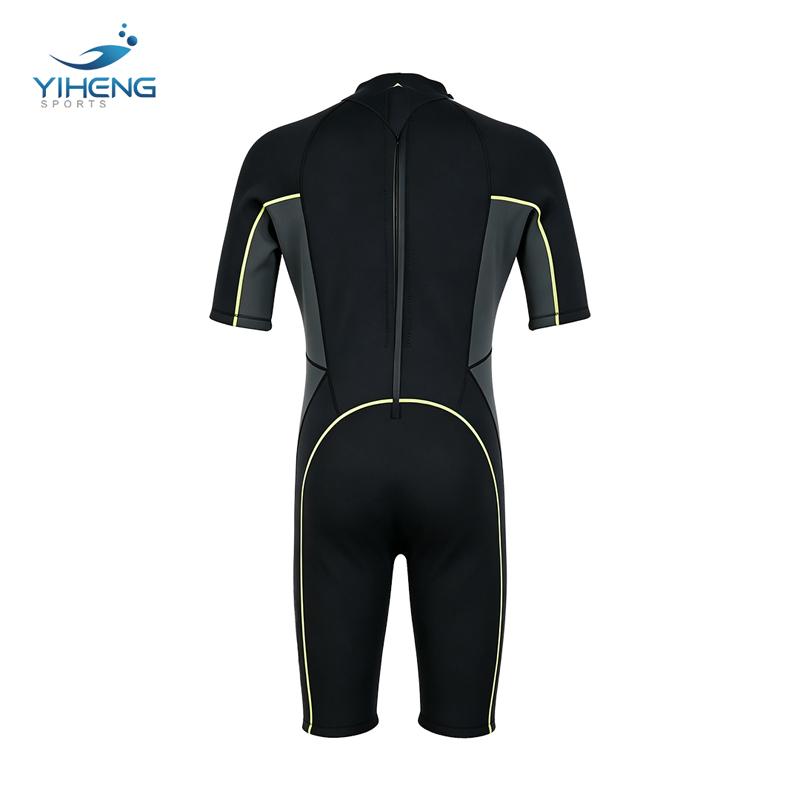 Men's 3mm Short Sleeve Back-Zip Shorty WetsuitA 3mm shorty for mild water, with short sleeves and legs, YKK back zipper for easier entry, and stretch neoprene for sailing and surfing.View Product →
The back zip deserves a mention for anyone buying their first neoprene suit — it is far easier to enter and exit than a chest zip, which matters more than most people expect on a cold morning.
Neoprene Bikinis and Swim-Cut Suits
For warm-water surfers who want coverage without a full wetsuit, neoprene bikinis and swim-cut suits have become the most interesting category in the market. A 2mm neoprene top gives the hold of a wetsuit with the feel of swimwear, and a bonded, printed panel adds UV protection without adding bulk. The trick is to keep the neoprene thin enough to move and to line it so it does not cling uncomfortably when wet.
Look for four-way stretch material, a lined interior, and seams that are either flatlocked or glued and blind-stitched. Printed gradients and colour-block panels are popular because they hide wax marks surprisingly well — a small thing that makes a suit look new for longer.
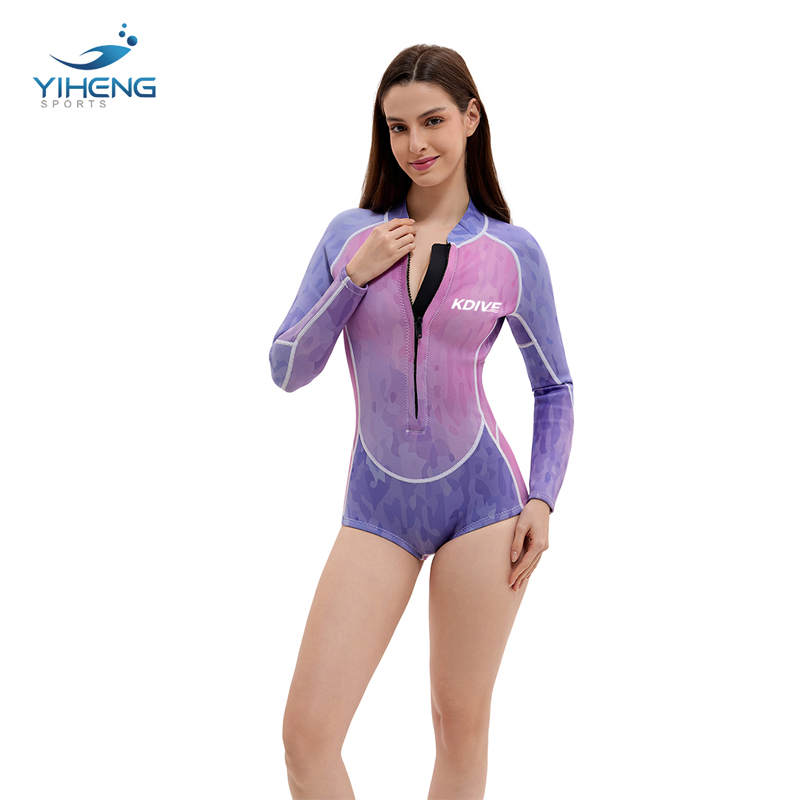 Women's 2mm Purple Gradient Print Bikini WetsuitA 2mm bikini-cut wetsuit with purple gradient print, plush lining and flatlock seams, offering lightweight warmth for swimming, snorkeling and paddle boarding in 22–26°C water.View Product →
These suits suit a specific window: water above roughly 22 °C, sessions of an hour or less, and riders who run warm. Below that, most people want sleeves.
Rash Guards and the Details That Save a Session
If you only buy one surfing layer, make it a good rash guard. A UPF50 long-sleeve top solves the three most common problems at once: board rash on the chest, sunburn on the back of the neck and arms, and friction from wax. Paired with a secure bottom it is a complete warm-water surfing outfit, and it layers under a neoprene suit when the temperature drops.
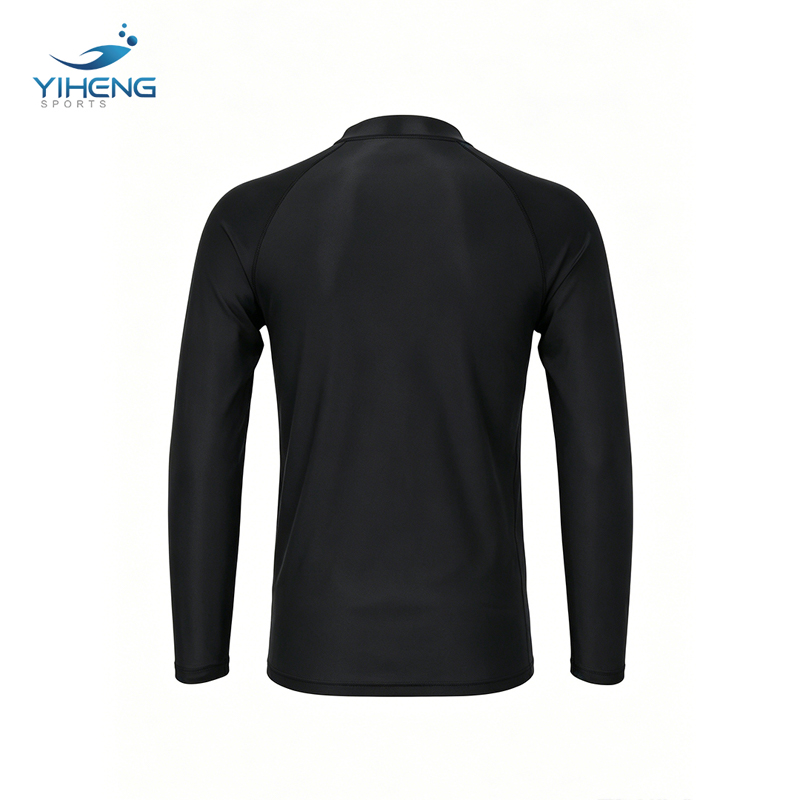 Men's UPF50+ Long-Sleeve Quick-Dry Rash GuardA black long-sleeve Lycra rash guard with UPF50+ sun protection, flatlock seams and quick-dry stretch, useful alone or layered under a neoprene suit.View Product →
Materials matter here as much as in wetsuits. A quick-dry knit with a tight gauge resists pilling and holds its sun protection through repeated washing, while cheap open knits stretch out and go translucent within a season. If you are curious how the fabric side of this works, our notes on how SCR neoprene laminated with nylon jersey is used in water-sports apparel cover the layering and bonding process in more detail.
Two small details are worth hunting for: a slightly dropped hem at the back, so the top does not ride up during paddling, and a snug but non-binding collar that sits below the jaw rather than across the throat.
Care That Makes a Suit Last
Salt, chlorine, sunscreen and UV all attack elastane, and most suits fail at the seams long before the fabric wears through. A short routine makes a real difference:
- Rinse in cool fresh water after every session — before the suit dries, not after.
- Wash occasionally with a mild, non-detergent cleaner; never use fabric softener or hot water.
- Dry flat or hang in the shade, inside out. Direct sun and hot car interiors degrade neoprene quickly.
- Store loosely folded or hanging, away from other neoprene pressing against it for months.
- Repair small seam lifts early with a proper neoprene adhesive rather than waiting for a full split.
Do that and a well-made suit will comfortably outlast two or three cheap ones, which is a better argument for quality than any marketing claim we could make.
Buying or Making Surf Swimwear at Scale
For shops, schools and brands, the sourcing side of this category has its own logic. Surf swimwear sits at the intersection of swimwear tolerances and wetsuit construction, so a supplier needs to be comfortable with both thin four-way stretch knits and neoprene lamination, and with flatlock stitching across both. Ordering a size run from a maker who normally produces only pool swimwear tends to surface problems at the seam and the band rather than in the print.
We make both sides of that equation in-house — the neoprene fabric from 2mm to 9mm in SBR and CR grades, and the finished garments built from it — which is mostly useful because it lets us adjust a pattern and a material together instead of negotiating between two factories. If you are developing a surf swimwear line or restocking a rental fleet, get in touch with our team and describe the water your customers actually swim in; that detail shapes the spec more than anything else on the brief.
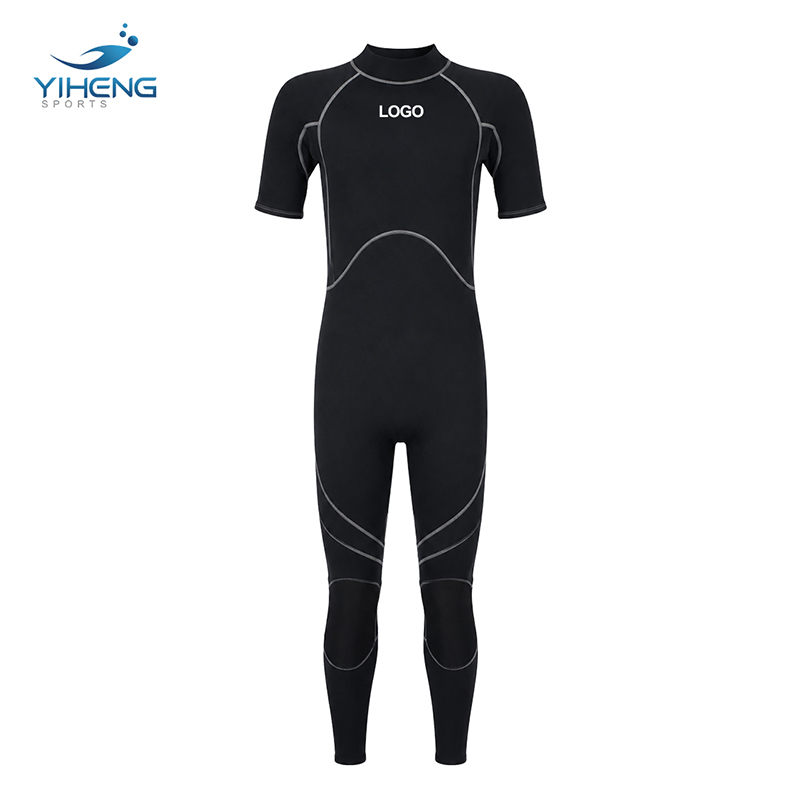
LET’S DEVELOP YOUR NEXT NEOPRENE PRODUCT LINE
Quick Links
Product Categories
Contact Us
-
 Email: postmaster@yihengsport.com
-
 Mobile: +86-13564100539
-
 No. 480 Jiangping Road, Madian, Binjiang Town, Taixing City, Taizhou City, Jiangsu Province, China.
Copyright © Jiangsu Yiheng Sports Products Co., Ltd. All Rights Reserved
China Wetsuit Manufacturer Neoprene Fabric Manufacturer
